Views: 19 Author: Site Editor Publish Time: 2026-08-28 Origin: Site
Choosing the right pool heating system depends on your climate, pool size, heating speed and long-term operating costs. Compared with traditional pool gas heaters, pool heat pumps generally offer higher energy efficiency and lower running costs in moderate climates, while gas heaters typically provide faster heating.
A pool heat pump works by transferring heat from the surrounding air into the pool water rather than generating heat through fuel combustion. This allows it to achieve a high Coefficient of Performance (COP) and can help extend the swimming season from early spring through late autumn. However, the best heating solution depends on local climate, energy prices, pool usage and installation requirements.
In this guide, we answer the most common questions about pool heat pumps vs. gas heaters, including cost, efficiency, COP, installation, sizing, refrigerants, certifications and common operating issues.
In many cases, pool heat pumps can be cheaper to operate than gas heaters, particularly in moderate climates.
A gas pool heater generates heat by burning fuel, typically operating at an efficiency of around 80–95%. But a pool heat pump does not create heat directly. Instead, it transfers ambient heat from the air into the pool water, allowing it to achieve a Coefficient of Performance (COP) of approximately 5.0–7.0 or even higher. This means a heat pump can produce 5–7 units of heat energy for every 1 unit of electricity consumed.
As a result, heat pumps consume far less energy to maintain the same pool temperature, especially during moderate outdoor conditions common throughout much of Europe.
A heat pump costs more upfront but pays for itself in 2–3 seasons through dramatically lower running costs for regular swimmers.
Over a 10-year ownership period, the total operating cost difference can become substantial:
10-Year Ownership Estimate | Pool Heat Pump | Gas Heater |
Initial Equipment + Installation | €4,500–€7,000 | €2,700–€5,500 |
Estimated 10-Year Energy Cost | €3,000–€5,400 | €10,800–€19,200 |
Estimated Total Ownership Cost | €7,500–€12,400 | €13,500–€24,700 |
*The following figures are illustrative estimates intended to show the potential long-term cost difference between pool heat pumps and gas heaters.
The pricing information above is intended as a general reference only. Prices may vary by country and region; please refer to local conditions for specific details.
For pool owners who use their pool regularly, a heat pump can be worth the investment because it typically offers lower operating costs, stable temperature control and a longer swimming season.
Extremely high Energy efficiency compared to gas heaters.
Cost savings over time.
Environmentally friendly heating options.
Year-round swimming possibilities.
Comfort benefits (consistent temperature, gentle heating).

COP (Coefficient of Performance) measures how efficiently a heat pump converts electricity into pool heat. Higher COP = lower running costs.
COP is the ratio of heat output to electrical input. A COP of 6 means the heat pump delivers approximately 6 kWh of heat for every 1 kWh of electricity consumed under the stated test conditions. Compare that to a gas boiler at ~90% efficiency (COP ≈ 0.9), and the difference is stark.
Modern efficiency tiers:
Standard on/off heat pump: COP 5–7
Full inverter heat pump: COP up to 20 ~ 26(under ideal conditions)
Gas/propane heater: COP ~0.9 (effectively less than 100% efficient)
Inverter technology is the key point here. An inverter-driven heat pump with COP 6 uses up to 80% less energy than a gas heater and 30–50% less than an older fixed-frequency heat pump for the same heat output. The compressor automatically adjusts speed to maintain the target temperature rather than cycling on and off, which saves energy and reduces wear.
Otherwise, Look for units operating range rated for –15°C to 43°C ambient temperature to ensure year-round reliability. However, for maximum energy efficiency, the optimal operating temperature range is 15°C to 35°C.
Yes. Depending on the model, a reversible pool heat pump can provide both heating and cooling. This allows the same system to help maintain a comfortable pool temperature across different seasons.
Match certifications to your target region; prefer R290 or R32 refrigerant for better efficiency and lower environmental impact.
If you’re importing or distributing across multiple markets, compliance is non-negotiable. The baseline requirements by region:
| Market | Common compliance requirements |
|---|---|
| Europe | CE marking |
| America | UL/ETL and safety requirements |
| Canada | CSA/UL compliance |
| Australia & New Zealand | AS/NZS compliance |
Additional technical certifications worth specifying:
Hermetically sealed, factory-tested units to prevent refrigerant leaks
IP65-rated electrical enclosures for outdoor durability and water/dust resistance
R290 and R32 are both widely used in modern heat pump systems. R290 is increasingly adopted in new-generation pool heat pumps because of its very low Global Warming Potential (GWP), while R32 also offers a lower GWP than older R410A systems.
R290 has a GWP of approximately 0.02 on a 100-year basis, compared with approximately 2,088 for R410A. It can also offer favorable energy-efficiency performance and may require a lower refrigerant charge depending on the system design. However, the most suitable refrigerant depends on the heat pump design, applicable safety requirements, local regulations and market requirements.
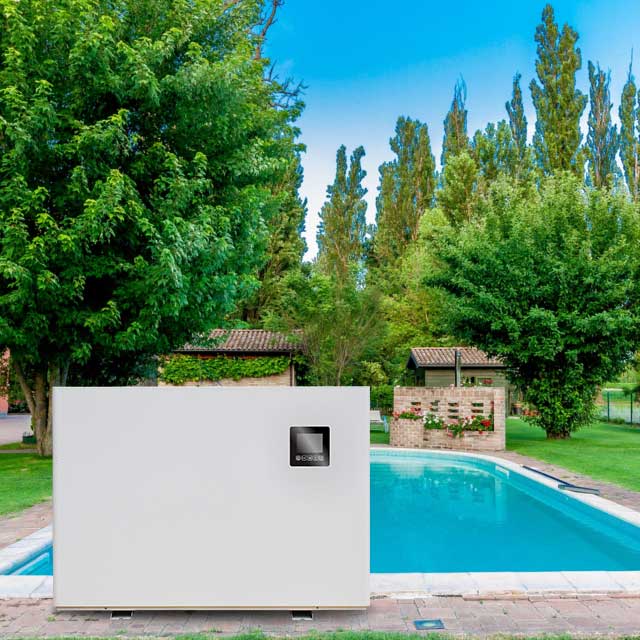
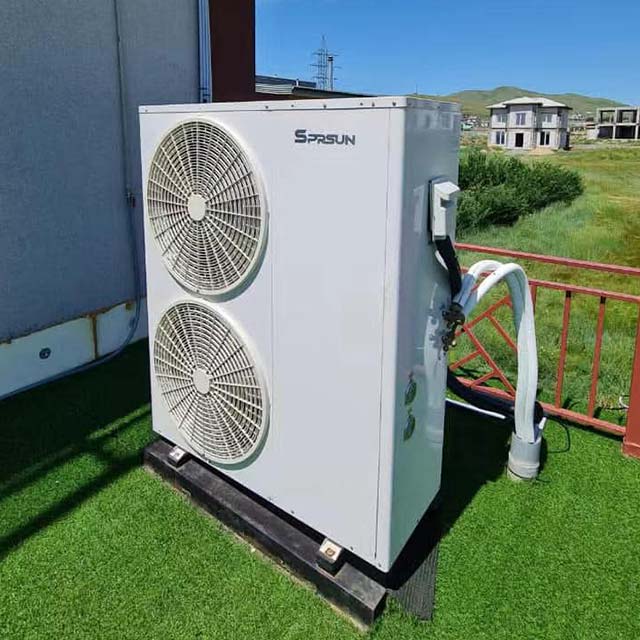
Pool heat pumps must be installed outdoors in a well-ventilated area to prevent air recirculation, which kills efficiency.
Key clearance and placement rules to share with installation teams:
Surrounding clearance: specific installation requirements may vary depending on the unit’s air intake and exhaust configuration. For example, the exhaust side must be at least 1.5 meters from the wall, and all other sides must be at least 0.7 meters from the wall.
Distance from pool edge: Typically 3.5 m minimum to the water’s edge (safety), and no more than 7.5 m to minimize heat loss through long pipe runs.
Surface: Must be installed on a flat, level surface. The unit’s adjustable feet should be used to ensure stability.
Chemical exposure: Never install close to harsh or corrosive chemicals (chlorine storage, acid tanks).
Condensation: Heat pumps produce significant condensation during operation—this is normal, not a leak.
Specifier tip: If you’re designing a commercial pool plant room, factor these clearance and ventilation requirements into the layout early. Retrofitting is always more expensive.
Before installation, check:
Adequate airflow around the unit
Minimum manufacturer-specified clearances
Stable and level foundation
Proper drainage for condensation
Distance from chlorine and chemical storage
Suitable electrical supply
Correct water flow rate
Protection from excessive air recirculation
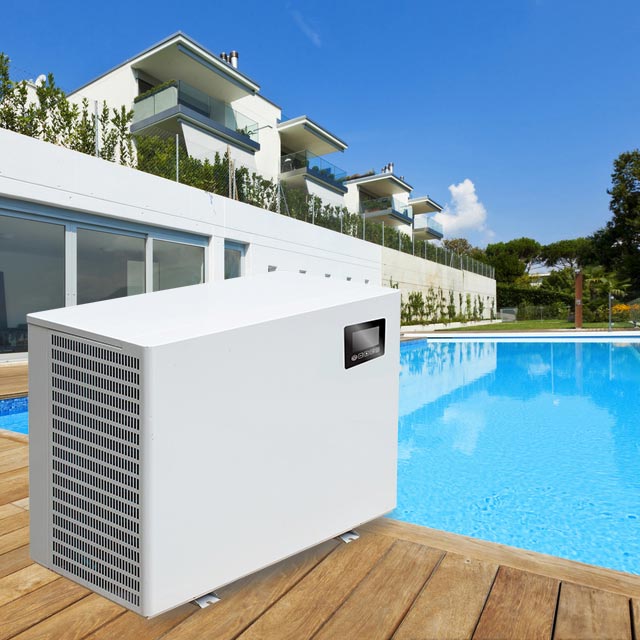
Depending on the model and capacity, pool heat pumps can be used in a variety of settings, ranging from private pools in single-family homes or small-to-medium-sized hot tubs to medium-to-large commercial pools in hotels, apartment complexes, and spas.
A typical 50 m³ (≈13,200-gallon) residential pool in a mild climate needs a 14–19 kW heat pump to maintain comfortable swimming temperatures. For a 50,000-litre commercial pool, an 18 kW electric heat pump is generally recommended as a starting point.
Three factors that can shift sizing up or down:
Pool cover: Using a thermal cover can slash heat loss by up to 70%, meaning you can specify a smaller unit or guarantee significantly lower running costs for your client.
Wind exposure: Unprotected, windy sites lose heat much faster—consider bumping up one size tier.
Usage pattern: Daily-use commercial pools need more heating power and faster recovery than a backyard pool heated only on weekends.
Pool volume alone is not enough to determine the correct heat pump size. Climate, desired water temperature, pool cover, wind exposure, heat-loss characteristics and operating schedule should also be considered.
If you need a more accurate and detailed guide to selecting a pool heat pump, please contact the SPRSUN sales team.


Customer Case Studies: The SPRSUN Ocean Series Pool Heat Pump are perfectly suited for use with the big Spa of 1,800-liter(normally increase 1 degrees pr hr. - -12 degrees pr hr in 8 degrees outdoor).
The SPRSUN’s pool heat pump is equipped with AI-powered automatic defrosting, which intelligently determines when to defrost and performs the process quickly, ensuring normal operation even in low-temperature environmental conditions.
When starting the pool heat pump for the first time, it is generally recommended to turn it on 24 to 48 hours in advance.
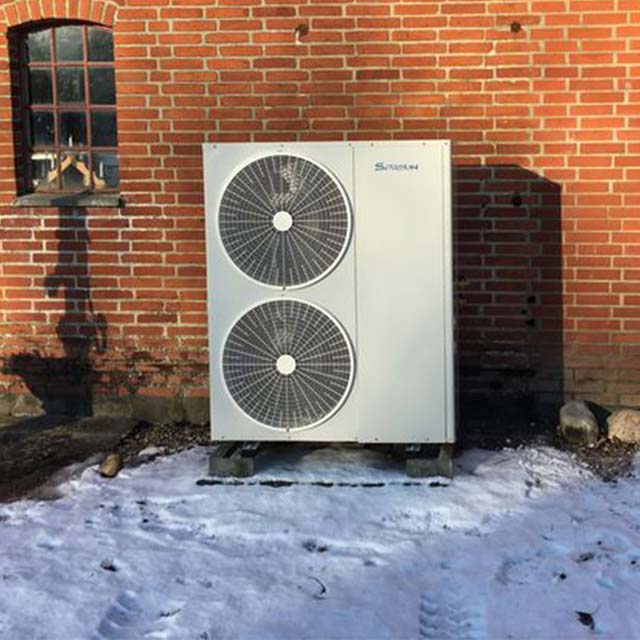
Yes, but heating performance depends on the model's operating temperature range and the outdoor conditions. Modern pool heat pumps can operate at low ambient temperatures, but heating capacity and efficiency generally decrease as outdoor temperatures fall.
When the pool is not in use during freezing conditions, appropriate winterization measures should be taken. Depending on the system and climate, this may include draining water from the pipes or using an anti-freeze mode to help prevent freezing damage.
Electricity consumption depends on the pool heat pump's electrical input power, operating time and operating conditions. As a simple estimate, you can use:
Unit power rating × 24 hours = Electricity consumption (in kWh)
The time required to heat a pool depends on pool volume, heat pump capacity, starting water temperature, target temperature, ambient temperature and heat loss. A properly sized heat pump can gradually raise the water temperature, but heating a large temperature difference may take many hours or longer.
Using a thermal pool cover can significantly reduce heat loss and help the pool reach and maintain the target temperature more efficiently.
Yes, pool heat pumps can be used with saltwater pools when the unit is designed for saltwater applications. However, proper water chemistry and regular maintenance are important to help prevent corrosion and maintain long-term performance. Always check the manufacturer's specifications for the permitted salt concentration before installation.
Typically, the manufacturer’s manual includes information on common error codes and troubleshooting steps, so users can refer to it for guidance.
Yes, the pool unit's casing meets the IPX4 waterproof rating, fully satisfying the requirements for normal outdoor installation.