Views: 2 Author: Site Editor Publish Time: 2026-10-23 Origin: Site
Europe has experienced increasingly intense summer heatwaves in recent years, with extreme temperatures affecting countries across the continent. Prolonged heat can disrupt daily life, increase demand for cooling and put additional pressure on electricity systems. Hot, dry conditions can also increase wildfire risks in vulnerable regions.
As extreme heat becomes a growing concern, keeping homes comfortable during summer is becoming an increasingly important consideration for European households. However, choosing a cooling solution involves more than simply lowering indoor temperatures. Energy consumption, installation requirements and environmental impact can all influence the long-term value of a system.
For homeowners, the question is not just how to stay cool during a heatwave, but how to maintain comfortable indoor temperatures throughout the year without unnecessary energy costs or environmental impact.

Hot summer days are only part of the challenge. When outdoor temperatures remain high overnight, homes can retain accumulated heat, making it difficult for residents to sleep comfortably.
Fans and portable air conditioners offer accessible ways to cope with hot weather, but each has limitations. Fans improve comfort by circulating air and promoting the body's natural cooling process, although they do not directly lower room temperature. Portable air conditioners can reduce indoor temperatures, but they often require an exhaust hose through a window or wall, take up floor space and may generate noticeable noise. If the exhaust opening is not properly sealed, warm outdoor air can enter and reduce cooling effectiveness.
These options may be suitable for short-term or single-room cooling, but homeowners planning for increasingly hot summers may also want to consider operating costs, whole-home comfort and heating requirements during colder months.
Rather than focusing only on immediate relief from summer heat, it is worth evaluating solutions that can meet a home's needs across different seasons.
Air conditioning can make a significant difference to indoor comfort during hot weather, but its environmental impact depends on several factors, including electricity consumption, the source of that electricity, system efficiency and the refrigerant used.
Portable air conditioners and conventional split systems can provide effective cooling when properly selected and installed. However, electricity use can increase during prolonged periods of high demand, while refrigerant leakage during operation, servicing or disposal can contribute to greenhouse gas emissions.
For example, R410A, a refrigerant used in many air-conditioning systems, has a commonly referenced 100-year global warming potential (GWP) of 2,088. This means that, on that assessment basis, one kilogram of released R410A has a warming impact equivalent to approximately 2,088 kilograms of CO₂ over 100 years.
As European regulations increasingly restrict the use of certain high-GWP refrigerants in relevant applications, lower-GWP alternatives are becoming more important in the heating and cooling market.
For homeowners, this makes it worth looking beyond cooling capacity alone. System efficiency, refrigerant choice, installation quality and regular maintenance all influence the environmental impact of cooling equipment. These factors should be considered alongside cooling performance when comparing different systems.

When temperatures rise across Europe, choosing a cooling system involves more than comparing cooling capacity. Homeowners should also consider how often cooling is needed, whether the property requires winter heating, and how domestic hot water is supplied.
Conventional room and split air conditioners can be practical for cooling individual rooms or selected zones. An air-to-water heat pump, by contrast, can provide space heating and domestic hot water, as well as cooling when paired with compatible indoor equipment.
The most suitable option depends on the home's existing heating system, installation requirements, local climate and year-round energy needs. For a more detailed comparison of system types, operating principles, efficiency, installation costs and other factors, read our guide to heat pumps vs. air conditioners.
Consideration | Conventional room/split AC | Air-to-water heat pump |
Summer cooling | Suitable for selected rooms or zones, depending on system design | Available with compatible cooling distribution equipment |
Winter heating | Some models provide heating | Designed for water-based space heating |
Domestic hot water | Usually requires separate equipment | Available with compatible hot-water configuration |
Indoor heat distribution | Usually direct air cooling or heating | Uses water-based systems, such as compatible fan coils or radiant systems |
Best suited for | Cooling selected rooms or zones | Homes seeking integrated heating, cooling and hot water |
Installation considerations | Indoor units, refrigerant lines and outdoor unit | Outdoor unit, water pipework and compatible indoor equipment |
In regions such as northern Germany and Scandinavia, heating is often needed for much of the year, while intensive cooling may be required for shorter periods.
For these households, an air-to-water heat pump may be worth considering as a primary heating system, with compatible cooling available for warmer periods. Its suitability depends on the home's heat demand, existing heating distribution and required water temperatures.
However, reversible air conditioners can also provide heating. The better choice depends on the home's heating demand, required water temperatures, existing heat emitters and overall system design.
In countries such as Spain, Italy and Greece, long, hot summers can make cooling a major priority, while heating remains important during cooler months.
For these households, cooling performance may be a higher priority, but winter heating requirements and domestic hot-water needs should also be considered. An air-to-water heat pump designed for both heating and cooling may be suitable where its performance and installation requirements match the property.
The right choice depends on local climate, heating and cooling demand, existing equipment and installation costs. An air-to-water heat pump is not automatically the best option for every home.

An air-to-water heat pump transfers thermal energy between outdoor air and a water-based heating or cooling system. It uses a refrigeration cycle to move heat rather than generating all the required heat directly from electricity.
During heating operation, the heat pump extracts thermal energy from outdoor air and transfers it to water circulating through a compatible heating system. Depending on the installation, this water can supply underfloor heating, suitable radiators or fan coil units.
Modern heat pumps can operate in cold weather, although their capacity and efficiency vary with outdoor temperature, flow-water temperature and equipment design.
When the system supports reversible cooling, its operating cycle can be switched to remove heat from the building.
The heat pump produces chilled water that circulates through compatible fan coil units or suitable radiant cooling systems. These indoor units absorb heat from the rooms and transfer it back to the heat pump for release outdoors.
There is an important installation consideration: standard radiators are generally not suitable for cooling. Fan coil units or properly designed radiant cooling systems are more appropriate. Radiant systems also need suitable condensation control to prevent moisture from forming on cool surfaces.
Cooling performance therefore depends not only on the outdoor heat pump but also on the indoor distribution system, controls and building conditions.
An air-to-water heat pump designed for domestic hot water can heat water for showers, bathing and other household uses, typically through a compatible storage tank or integrated hot-water arrangement.
This can reduce the need for separate hot-water heating equipment. Actual energy savings depend on the system's efficiency, household consumption, electricity prices and the performance of the equipment it replaces.
As demand for cooling increases across Europe, refrigerant choice and energy efficiency are becoming important considerations. The EU's revised F-gas Regulation (EU) 2024/573, applicable since March 2024, strengthens measures to reduce fluorinated greenhouse gases and encourages the transition toward lower-GWP alternatives in relevant applications.
R290, commonly known as propane, is a natural refrigerant with a global warming potential (GWP) of 0.02, compared with 2,088 for R410A under the EU regulation's 100-year GWP values. This means R290 has a substantially lower direct climate impact if refrigerant is released into the atmosphere.
Key Considerations When Choosing an R290 Heat Pump
Low-GWP refrigerant: Offers a lower potential direct climate impact from refrigerant leakage than high-GWP alternatives.
Energy efficiency: Overall performance depends on equipment design, operating conditions and electricity consumption.
Safety: R290 is classified as an A3, highly flammable refrigerant, so appropriate safety measures and professional installation are essential.
When comparing R290 heat pumps, consider not only the refrigerant's GWP but also the unit's seasonal efficiency, safety features and suitability for the intended application.
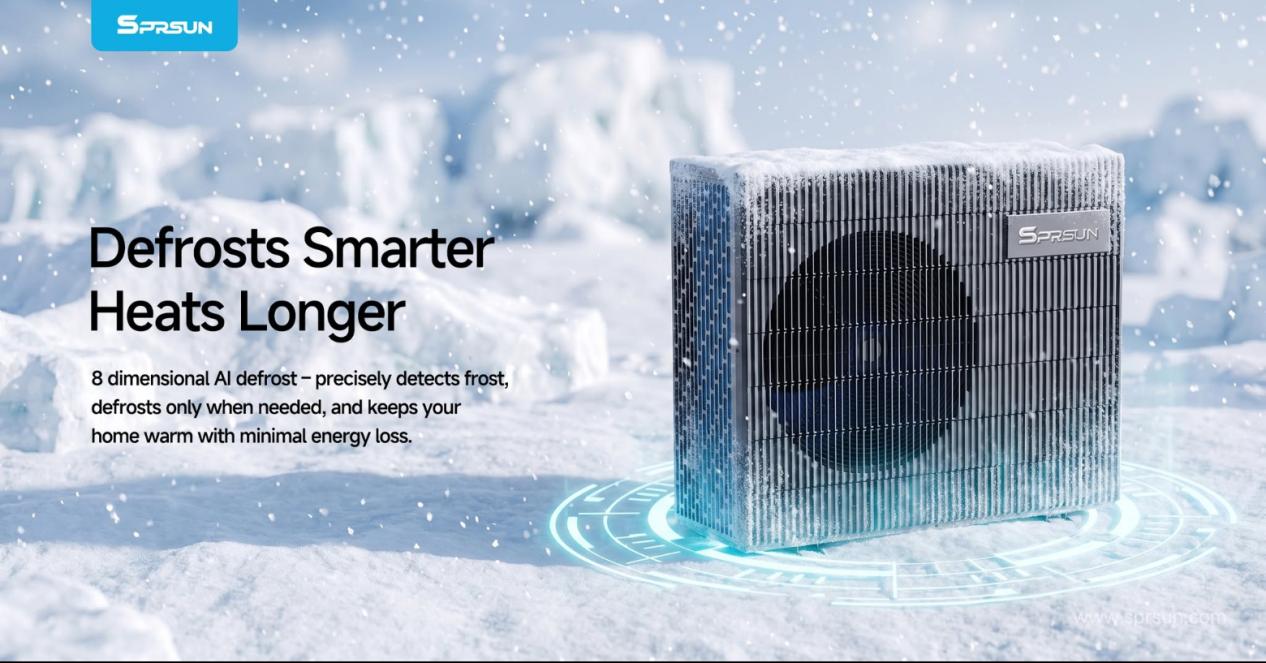
Installing a cooling system involves more than choosing the right equipment. In European homes, building layouts, property rules and existing heating infrastructure can all influence the installation process.
A multi-split air-conditioning system may require multiple indoor units, refrigerant pipework and wall penetrations. In apartment buildings, homeowners may also need to check property-management rules, façade restrictions or local approval requirements before installing outdoor equipment. Portable air conditioners offer a simpler option for some rooms, but their exhaust hoses need a suitable route through a window or wall.
An air-to-water heat pump takes a different approach by connecting to a water-based heating or cooling distribution system. Depending on the property, the installation may include an outdoor unit, a hot-water cylinder, hydraulic components, controls and compatible indoor emitters. Existing radiators, underfloor heating or fan coils may be usable for heating, but cooling generally requires compatible fan coils or a properly designed radiant system.
Before choosing a system, consider:
Existing heating distribution: Check whether your current radiators, underfloor heating or fan coils are compatible with the intended system and operating temperatures.
Cooling requirements: Assess which rooms need cooling and whether the indoor distribution system can meet the demand.
Space and noise: Ensure the outdoor unit has adequate airflow and a suitable location that considers noise and neighbouring properties.
Planning and permissions: Check local regulations, property-management requirements and any restrictions on outdoor units or façade changes.
Installation and maintenance: Ask a qualified professional to assess system sizing, compatibility, safety and ongoing servicing requirements.
An integrated system may reduce the need for separate heating, cooling and hot-water equipment, but installation is not necessarily simpler or less expensive. Costs depend on the building, system design and modifications required.
European climate and building policies are encouraging improvements in building energy performance and a transition toward lower-emission heating systems. For homeowners considering a heat pump, these changes may influence long-term renovation plans, equipment selection and the overall cost of upgrading a property.
The revised Energy Performance of Buildings Directive (EPBD), adopted in 2024, establishes a framework for improving building energy performance across the EU.
Under the directive, new buildings owned by public bodies must meet the zero-emission building standard from 1 January 2028, while the requirement applies to all new buildings from 1 January 2030, subject to the directive's provisions and applicable exemptions. Zero-emission buildings are designed to have no on-site fossil-fuel carbon emissions and very high energy performance.
These requirements do not mean that every existing home must immediately replace its gas or oil boiler with a heat pump. For existing buildings, the directive establishes broader energy-performance and renovation requirements, with implementation details determined at member-state level.
For homeowners planning a renovation, improving insulation and selecting an efficient heating system can be important steps toward meeting future energy-performance expectations. A heat pump may be suitable, depending on the building's heat demand, existing heating distribution and local conditions.
Government incentives can help reduce the upfront cost of replacing an existing heating system with a heat pump. However, the available support, eligibility criteria and application procedures vary by country and can change over time.
In Germany, the Federal Funding for Efficient Buildings (BEG) programme has provided support for eligible heating upgrades. Depending on the applicant's circumstances and the applicable funding rules, the combined grants for an eligible residential heating replacement can reach up to 70% of eligible costs. The actual rate depends on the applicable base funding and qualifying bonuses.
Other European countries operate their own support schemes, with different funding levels and conditions. Homeowners should check the latest information from their national or local authorities before making an investment, including whether the selected equipment, installer and property meet the relevant requirements.
When assessing a heat pump installation, homeowners should look beyond the initial purchase price. Factors such as seasonal efficiency, electricity tariffs, existing heating equipment, installation costs, maintenance requirements and available incentives all affect the overall economics.
Homeowners should compare installation costs, seasonal efficiency, energy prices, maintenance and available incentives to assess whether a heat pump is a suitable long-term investment.

As European summers become more challenging, choosing a cooling system is increasingly about long-term home comfort rather than short-term relief from a heatwave.
For households that need space heating, cooling and domestic hot water, an appropriately designed air-to-water heat pump may provide a practical alternative to using separate systems. However, the right choice depends on the local climate, property's needs, existing equipment, installation requirements and running costs.
By evaluating comfort across all seasons and comparing the total costs of different solutions, homeowners can make a more informed decision about their long-term heating and cooling needs.
SPRSUN is a heat pump manufacturer focused on developing energy-efficient solutions for residential and commercial applications. With experience in heat pump technology, SPRSUN provides solutions for customers exploring efficient heating, cooling and domestic hot-water systems.
As interest in lower-GWP refrigerants and integrated home comfort continues to grow, selecting the right equipment and system configuration remains essential. Product selection should take into account the intended application, local climate, installation conditions and relevant market requirements.
Explore SPRSUN's heat pump solutions to learn more about available systems and identify an option that fits your project requirements.
Looking for a custom heat pump solution for your market or project? Contact SPRSUN to discuss your application and product requirements.
An air-to-water heat pump may be a better choice for homes that need heating, cooling and domestic hot water from one integrated system. Unlike a conventional room air conditioner, it transfers energy through a water-based distribution system. However, an air conditioner may be more suitable for cooling alone, particularly when only one or two rooms need temperature control. The best option depends on your home’s layout, climate and year-round heating and cooling needs.
Yes, a reversible air-to-water heat pump can provide cooling by circulating chilled water through compatible fan coil units or suitable radiant cooling systems. However, cooling performance depends on the system design, cooling capacity and heat distribution equipment. Conventional split air conditioners cool rooms directly by circulating conditioned air, while air-to-water heat pumps distribute cooling through water. Radiant cooling systems also require condensation control to prevent moisture from forming on surfaces.
Yes. An air-to-water heat pump can often connect to existing radiators or underfloor heating, provided the system is compatible with the heat pump’s operating temperatures and capacity. Some homes may need larger radiators, pipework adjustments or other upgrades to achieve efficient heating. For summer cooling, compatible fan coil units or properly designed radiant cooling systems are usually more appropriate.
It can be, but savings depend on electricity and fuel prices, equipment efficiency, insulation, system design and household usage. An air-to-water heat pump can provide heating, cooling and hot water, potentially reducing the need for separate systems. However, installation costs and operating expenses vary between properties, so it depends.
R290, also known as propane, is increasingly used in heat pumps because it has a very low global warming potential (GWP). Under the values referenced in EU Regulation 2024/573, R290 has a GWP of 0.02, compared with 2,088 for R410A. This makes R290 an attractive alternative to higher-GWP refrigerants. However, R290 is classified as an A3 refrigerant, meaning it is highly flammable. Equipment design, installation and servicing must therefore follow the applicable safety requirements.
Yes, heat pumps may qualify for government grants, subsidies or other financial incentives in some European countries. However, eligibility, funding amounts and application requirements vary by country and may depend on the property, the heat pump model, installer qualifications and the type of heating system being replaced. For example, the UK’s Boiler Upgrade Scheme offers grants for eligible air-source heat pump installations. Before purchasing a system, check the latest requirements with your national energy agency or local authority.