Views: 60 Author: Site Editor Publish Time: 2026-06-22 Origin: Site
South Korea is undergoing a significant energy transition. By 2030, the government plans to mandate heat pump installations in residential buildings as part of its climate and energy efficiency targets. With South Korea's unique residential landscape—dominated by high-rise apartments, cold winters, and limited space—choosing the right heat pump requires understanding both your home type and installation requirements.
This guide will walk you through the different heat pump options available, what each installation entails, and how to determine which solution best fits your home.
Detached Homes (Single-Family Houses)
- Located in suburban or rural areas with more outdoor space.
- Often lack city gas connections, making them priority targets for government mandates.
- Most flexible for various heat pump types
Low-Rise partments (3-5 Floors)
- Moderate outdoor space with shared infrastructure.
- Installation challenging due to limited roof or courtyard access.
- May require building management coordination.
High-Rise Apartments (10+ Floors)
- Significant space constraints and structural limitations.
- Most residents rely on city gas boilers.
- Retrofitting requires careful planning and building approval.
Homes Under Renovation
- Offer opportunities for flexible installations.
- Can integrate heat pumps into broader heating system upgrades.

Air-source heat pumps extract heat from outdoor air and are the most common choice for Korean homes.
Two Main Configurations:
Air-to-Air Systems
- Provide heating and cooling through indoor air handlers.
- Ideal for homes without existing water-based heating systems.
- Similar to split air conditioners many Koreans already use.
Air-to-Water Systems
- Heat water for radiators, underfloor heating, or domestic hot water.
- Better suited for replacing traditional boiler systems.
- Can integrate with existing ondol-style radiant floor heating.
Installation Requirements:
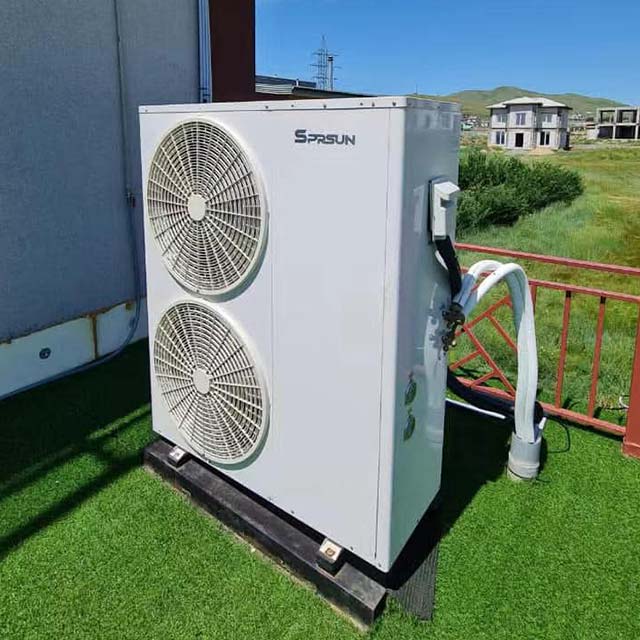
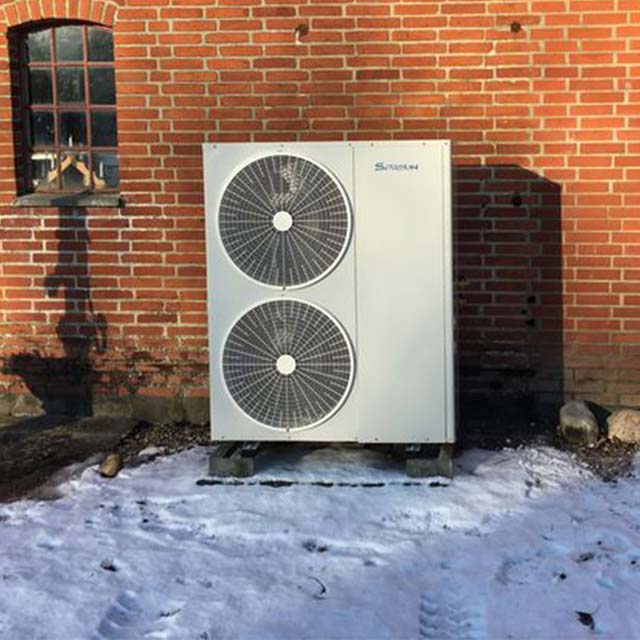
- Outdoor unit needs proper placement with ventilation and structural support.
- Available in split-system (separate indoor/outdoor units) or monoblock (single outdoor unit with water lines) configurations.
- Some models require indoor thermal storage tanks.
Best For:
- Detached homes: Easy installation in yards or side spaces.
- Low-rise apartments: Balcony or rooftop installation possible.
- High-rise apartments: Compact split or monoblock units with building approval.
Retrofitting Older Korean Homes:
Air-to-water systems work particularly well for homes with traditional ondol underfloor heating. Since water-based heating infrastructure already exists, homes can transition from gas boilers to heat pumps with minimal additional plumbing work.
Pros: Lower installation cost than ground-source systems; works with existing Korean heating infrastructure; scalable and adaptable
Cons: Efficiency decreases in extremely cold weather (though modern cold-climate models perform well to -25°C); outdoor unit placement may be challenging in dense apartment buildings
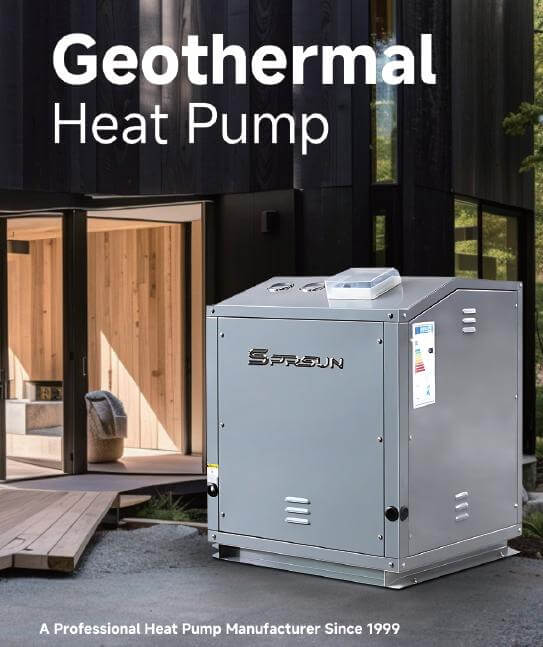
Ground-source heat pumps extract stable heat from the ground through buried pipes.
Installation Requirements:
- Requires excavation or drilling for underground loop systems.
- Horizontal loops need substantial yard space (150-200m²).
- Vertical boreholes require less surface area but drilling 50-150 meters deep.
- Higher upfront cost and longer installation time (1-2 weeks).
Best For:
- Detached homes with large outdoor areas.
- New construction or major renovation projects.
- Rural properties with ample land.
Retrofitting Considerations:
Challenging for existing Korean homes due to excavation requirements and cost. Most viable for rural homes or properties undergoing complete renovation.
Pros: Extremely energy-efficient (300-400% efficiency); stable performance regardless of outdoor temperature; very low operating costs; longest lifespan (20-25 years).
Cons: High upfront investment (2-3x air-source cost); requires substantial outdoor space; not suitable for apartments; installation is disruptive.
Water-source heat pumps extract heat from nearby water bodies or closed-loop water systems.
Installation Requirements:
- Requires access to lake, river, pond, or groundwater.
- Additional plumbing for water circulation.
- May require permits and environmental compliance reviews.
Best For:
- Detached homes near suitable water sources.
- Developments with centralized water-loop infrastructure.
Pros: Highly efficient; stable performance; lower operating costs than air-source in suitable conditions.
Cons: Limited applicability due to water source requirements; regulatory hurdles; not viable for most urban homes.
Self-contained units providing whole-home hot water without separate outdoor units.

Installation Methods:
- Ductless: Uses ambient indoor air.
- Ducted with 2 pipes: Draws outdoor air in and exhausts it out.
- Semi-ducted with 1 pipe: Draws outdoor air in, exhausts indoors.
Installation Requirements:
- Minimal home modification required.
- Need 0.5-1m² floor space.
- Simple electrical connection (220V).
- Water connections to existing plumbing.
Best For:
- Apartments where outdoor unit installation is restricted.
- Detached homes with limited outdoor space.
- Supplemental hot water heating alongside existing systems.
Retrofitting Considerations:
Excellent for Korean apartments—no exterior modifications or building management approval needed. Can provide domestic hot water while existing gas boiler handles space heating, ideal for phased heat pump adoption.
Pros: Extremely space-efficient; simple installation; no building exterior modifications; good for phased adoption.
Cons: May not provide sufficient whole-home heating capacity in very cold climates without supplemental systems; efficiency depends on ambient air temperature.

Combination expansion and hot water storage tanks that must pair with outdoor heat pump units.
Installation Requirements:
- Indoor installation in utility room or mechanical space.
- Requires proper plumbing integration.
- Space needed: 0.5-0.8m² floor space.
Role in the System:
- Store heated water for domestic use.
- Provide thermal mass to reduce heat pump cycling.
- Enable hot water availability when heat pump isn't running.
Best For:
- Homes using air-to-water heat pumps.
- Properties with dedicated mechanical rooms.
Pros: Optimizes heat pump performance; provides reliable hot water storage; reduces equipment cycling; improves efficiency.
Cons: Requires dedicated indoor space; cannot operate without outdoor heat pump unit; adds to system cost.
Detached homes with yard space: All heat pump types viable; consider ground-source for maximum efficiency if budget allows; air-source offers best cost-performance balance.
Low-rise apartments with balcony access:Air-source split/monoblock systems most practical; all-in-one unit if balcony installation restricted; check building regulations.
High-rise apartments: All-in-one combo units often the only practical option; some buildings may allow compact air-source units on balconies; building approval essential.
Homes under renovation: Excellent opportunity for optimal system installation; consider ground-source if excavation already planned.
Whole-home heating in cold climates: Air-to-water systems or ground-source heat pumps recommended; must provide capacity for coldest temperatures
Domestic hot water primarily: All-in-one combo units or integrated hydronic tanks with air-source outdoor unit.
Both heating and hot water: Air-to-water systems with integrated storage tanks; ground-source systems for homes with space.
Supplemental heating: Air-to-air split systems for specific rooms or zones.
Minimal disruption: All-in-one combo units (1-2 days); air-source monoblock systems.
Moderate disruption: Air-source split systems; air-to-water systems with tanks (3-5 days).
Major disruption (renovation context): Ground-source systems (1-3 weeks); water-source systems.
Lower initial investment:
- Air-to-air systems: ₩3-6 million.
- All-in-one combos: ₩2-5 million.
- Air-to-water systems: ₩5-10 million.
Higher initial investment, maximum long-term savings:
- Ground-source systems: ₩15-25 million.
- Lowest operating costs (40-60% less than air-source).
- Longest lifespan (20-25 years).
*The actual price of a heat pump may vary depending on the region, brand, and specific model; therefore, the prices listed above are for reference only.
Government incentives: Check current subsidy programs covering 70% of installation costs; priority for detached homes without gas connections.
Look for KC mark (required in Korea), international standards (CE, ISO), energy efficiency ratings, and cold climate performance data. Choose licensed HVAC installers with manufacturer training and previous installation references.
Energy Efficiency: Modern heat pumps deliver 3-4 units of heat per unit of electricity (300-400% efficiency) versus gas boilers at 85-95% efficiency.
Climate Goals: Zero direct emissions; essential for meeting national climate commitments when powered by renewable electricity.
Energy Independence: Reduces reliance on imported natural gas; uses domestically-generated electricity.
Comfort and Air Quality: Consistent temperatures without combustion byproducts; many models include air filtration.
Property Value: Homes with modern heat pump systems may see higher resale values as 2030 mandates approach.
Home Type | Recommended HP Types | Key Installation Considerations |
Detached homes with yard | Ground-source , Air-source , Water-source | All options viable; choose based on budget and efficiency priorities |
Detached homes with limited outdoor space | Air-source monoblock, All-in-one units | Focus on compact design |
Low-rise apartments | Air-source split systems monoblock, All-in-one units | Check building regulations; |
High-rise apartments | All-in-one units, Compact air-source splits (if permitted) | Building approval essential; |
Homes with existing radiant floor heating | Air-to-water systems with hydronic tanks | Best retrofit option; works with existing infrastructure |
Renovation projects | Any type depending on scope; | Opportunity to install optimal system with minimal added disruption |
Choosing the right heat pump depends on your home type, heating needs, and budget. For most detached homeowners, air-to-water systems offer the best balance of performance and cost, especially for retrofitting existing radiant floor heating. For apartment dwellers, all-in-one combo units provide a practical entry point.
Investing in a heat pump today means lower heating costs, reduced carbon footprint, and reliable comfort—while future-proofing your home for Korea's evolving energy landscape.
Ready to transition to sustainable heating? Research options suited to your home type, consult qualified installers, and explore available government subsidies. The path to energy independence begins with understanding your options and taking the first step!