Views: 165 Author: Site Editor Publish Time: 2026-04-07 Origin: Site
1. Introduction: The "Language" of Noise: What Decibel Numbers Really Mean
2. A Pioneer in Heat Pump promotion—EU Regulations on Noise-Conscious Ecological Design
3. Noise-Sensitive Markets: A Quick Look at the Latest Heat Pump Guidelines in Germany and the UK"
4. SPRSUN’s Silent Heat Pump Solution: European-standard quality, Globally proven brand technology
5. Conclusions
Sound Level (dB(A) | Hearing sensations | Common Scenarios |
0-10 dB(A) | Near the threshold of hearing; essentially inaudible for most people in normal conditions | The sound of falling leaves; extremely quiet anechoic chamber |
20-30 dB(A) | Very quiet; barely noticeable ambient sound; requires a silent environment to perceive clearly | whisper at ~1–2 m; quiet bedroom; library reading area |
40-45 dB(A) | Quiet but clearly audible background noise; typical for calm indoor environments | Quiet office; residential interior at night; refrigerator hum; light rainfall |
50-60 dB(A) | Moderate indoor sound level; conversation becomes clearly audible but comfortable | Normal conversation (~60 dB at 1 m); residential street with light traffic; household appliances |
60-70 dB(A) | Noticeably loud; prolonged exposure may begin to cause mild listening fatigue | Busy office; vacuum cleaner; urban street traffic |
70-80 dB(A) | Loud; conversation requires raised voice; prolonged exposure can cause annoyance and possible long-term risk | Heavy traffic; hair dryer; busy café; city bus interior |
80-90 dB(A) | Very loud; communication difficult; extended exposure may cause hearing damage without protection | Lawn mower; motorcycle; factory machinery; subway/train interior |
>90 dB(A) | Extremely loud; uncomfortable; high risk of hearing damage with sustained exposure | Rock concert (~100–110 dB); chainsaw (~100 dB); nightclub; |
dB: Unweighted sound pressure level.
dB(C): C-weighting is often used for high-level noises, such as loud music or machinery hums, as it is more linear at low frequencies
Because this signal is filtered to simulate the human ear's sensitivity to sounds of different frequencies. It more closely mimics how the human ear responds to and perceives sound waves of different frequencies, making it more useful in practical applications.
*Disclaimer: For reference only ; please refer to the latest regulations in your region.)
In Europe, noise limits for heat pumps are considered a key indicator of “neighborhood friendliness.” If a unit exceeds these limits, it will not only fail inspection but may also face complaints from residents or even be subject to mandatory removal.
In fact, heat pump noise is regulated mainly through EU Ecodesign regulationsand national noise-protection laws. The requirements distinguish between:
1. Noise emitted by the device (emission at the source)
2. Noise perceived at neighboring properties (immission limits)*not legally
Below is a clear overview of the main EU standards.
It is important to understanding equipment compliance in your region is one of the essential steps in product review.
The main EU rule comes from Ecodesign Regulation (EU) No. 813/2013 for heat generators. It sets maximum sound power levels (dB(A)) depending on heat output.

*Image from:European Union Document 02013R0813-20170109
These limits refer to sound power measured at the heat pump itself (manufacturer test conditions).
For Example:
• A typical residential air-source heat pump (≈8–10 kW) must not exceed 70 dB(A) at the unit.
EU device limits do not guarantee neighbor comfort, and the EU does not set legally binding noise limits at the neighbor level. The following is a general references of the sound pressure at a receiving point (such as a neighbor’s window).
Typical outdoor Noise limits in many European residential zones:
Time | Typical Allowed Noise |
Day | ~45–55 dB(A) |
NIght | ~35–45 dB(A) |
For Example:
• Some installation standards require ≤42 dB(A) at the nearest neighbor property for small residential heat pumps.
Indoor Building Noise Guidelines
If the unit is installed inside or connected to interior spaces, recommended limits for rooms are roughly:
Time(Room type) | Typical Allowed Noise |
Day (living Room) | ~35 dB(A) |
Night (Bedrooms) | ~25 dB(A |
*These come from building acoustic standards used in several EU countries. please refer to the specific local environmental noise rules.
Noise-Sensitive Markets: A Quick Look at the Latest Heat Pump Guidelines in Germany and the UK"
Germany's regulations on heat pump noise do not focus merely on the products themselves, but place greater emphasis on the actual perception at the “environmental reception point” (i.e., outside a neighbor's window).
Key Regulation: TA Lärm(Technical Instructions on Noise Protection) , which is one of the administrative regulations under the Federal Immission Control Act (BImSchG).
Specific limits (residential areas):
Daytime (6:00 a.m. – 10:00 p.m.): 50 dB(A)
Nighttime (10:00 p.m. – 6:00 a.m.): 35 dB(A) (This is the most challenging threshold).
Measurement Method: Measurements are taken not at the equipment’s air outlet, but 0.5 meters in front of the window of the nearest neighbor’s sound-protected room (e.g., a bedroom).
Penalty points: If the heat pump produces noticeable low-frequency pulsations or a pure tone (tonality), a penalty of 3–6 dB will be automatically added to the measured value during evaluation.
Applicable tool: Sound Calculator suggest by the German Heat Pump Association (BWP) can be serves the reference for compliant installation.
**For users seeking the ultimate in quiet operation, acoustic hoods can be installed.
Demand for acoustic hoods is extremely high in the German and Swiss markets.
The United Kingdom regulates heat pump noise compliance through building planning frameworks, particularly under permitted development rules.
Key Regulations: MCS 007 (Microgeneration Certification Scheme) , MCS 020(a) , and Permitted Development Rights (PDR).
Specific limits (residential areas)
Heat pump operation must not exceed 37 dB(A) when measured at a point 1 meter from the nearest neighboring window.
*This requirement is based on MCS 020(a) – Air Source Heat Pump Noise Calculation, updated in March 2025 to support revised PDR rules in England, allowing installations within 1 meter of property boundaries while maintaining strict acoustic assessment standards.
Compliance(Please note):
If noise levels exceed 37 dB(A), the installation will no longer qualify for “automatic approval” and you will be required to apply to the local council for an expensive and
complex planning permission.
• Maximum Noise Limit: Generally, noise levels at the nearest neighbor’s property must not exceed 42 dB(A). This standard remains in effect so far to ensure quiet operation.
• Updated Standards (MCS 020 2025): The MCS 020 standard has been updated; among other changes, it now includes separate standards for heat pumps (MCS 020a) and wind turbines (MCS 020b).
• Permitted Development Changes: The new regulations allow for greater flexibility in placement, including installation closer to property boundaries and the use of larger units.
• Noise Measurement Locations
Noise is not measured directly at the heat pump itself, but is calculated at a nearby “receiver” location, typically as follows:
1 meter from the window or wall of a neighboring residence
The nearest noise-sensitive location, such as a bedroom window.
This reflects the impact of the noise on neighbors, rather than the equipment’s raw noise output.
*Standard Limits in Old and New Versions – Explanation
---Old Version MCS 020 42 dB(A) Single-point assessment method
---MCS 020(a) (Current) 37 dB(A) New calculation method using multiple assessment points
---Therefore, a lower value does not necessarily imply stricter installation requirements, as the calculation method has changed (sound power model vs. sound pressure model).
In England and Wales, the government the £7,500 grant under the Boiler Upgrade Scheme.
Although the subsidies themselves are administered by Ofgem, compliance with MCS rules is required for the following reasons:
Installers must provide an MCS installation certificate.
This certificate confirms that the installation meets MCS standards, and installers must perform a formal noise calculation prior to installation and include it in the MCS documentation.
In installation practice:
If the MCS noise calculation fails to meet standards, the installer must:
• Relocate the equipment
• Add sound barriers (e.g., soundproof fencing)
• Select a quieter model.
Noise is transmitted not only through the air but also through solid conduction.
A soundproof enclosure is installed around the compressor.
The metal panels of the machinery compartment are lined with 20-millimeter-thick high-performance noise-reducing material—corrugated cotton.
Vibration-damping piping design: SPRSUN uses rubber vibration-damping pads and flexible connectors to prevent resonance.
Optimized airflow design: SPRSUN employs large-diameter, low-speed fans. At the same airflow volume, the lower speed results in a gentler airflow, effectively eliminating sharp whistling noises.
The entire SPRSUN heat pump product line utilizes full DC inverter technology, eliminating the severe vibrations and start-stop noise associated with fixed-frequency compressors. Through smooth speed regulation, operating noise is significantly reduced.
Sleep Mode: The 5-inch touchscreen controller combined with SPRSUN heat pumps offers four operating modes, including a specially designed Sleep Mode with a programmable nighttime frequency-reduction and noise-reduction function. In this mode, the heat pump operates even more quietly and smoothly.

Our R290 Greenergy Evo innovatively reduces noise to as low as 36 d(B)A, achieving an A+++ energy efficiency rating at both 35°C and 55°C. This ensures the heat pump operates at peak efficiency across a wide range of ambient temperatures, maintaining high energy savings and helping users significantly reduce their energy bills.
As the industry increasingly focuses on the noise levels of heat pumps, it marks a trend leap from the basic needs toward better living.
From German suburbs to quiet neighborhoods in the UK, SPRSUN measures itself against the strictest EU benchmarks and real-world feedback from 60 countries. Our mission: to deliver clean energy solutions that let you feel the warmth without hearing the noise.
The main noise of heat pumps comes from the mechanical noise generated by the operation of three core components: compressor operation, fan airflow, and heat exchanger airflow. SPRSUN's advanced noise reduction design mainly reduces noise through vibration control, aerodynamic optimization, and intelligent frequency adjustment, as well as guiding users to install the heat pump correctly (including distance, obstacles, and location).
The noise level of heat pumps varies depending on the brand's process design and noise reduction technology. The European ERP directive requires that the nighttime noise of heat pumps is usually around 35-45 decibels (A). Taking SPRSUN's latest R290 Geenergy EVO series heat pump as an example, it has undergone multiple rounds of upgrades and transformations on the basis of traditional noise reduction processes, with a minimum noise as low as 36 dB(A). Even in residential areas at night, it can bring users a brand-new quiet experience.
No. Although EU directives provide an overall framework, different countries have different requirements for noise. For example, Germany and Switzerland have higher noise requirements and may implement stricter local noise limits; the UK's latest MCS 007 (Microgeneration Certification Scheme), MCS 020(a), and Permitted Development Rights (PDR) have put forward new requirements for local noise in the UK.
Yes. The design and testing of SPRSUN heat pumps comply with EU ErP requirements, relevant CE standards, and UK MCS standards. Our products are specially developed for the European market and have 17 years of experience in selling products in Europe, ensuring performance and regulatory compliance.
We recommend the latest R290 Geenergy Evo series. This series of heat pumps is built with AI intelligent control, double A+++ energy efficiency, and ultra-low noise performance as the core design concepts. Test data shows that its operating noise is expected to be reduced to 36 dB(A), which will provide an ideal heat pump solution with both high efficiency and quietness for European residential and high-end applications in the future.
ARE YOU LOOKING FOR MORE TIPS ON HOW TO REDUCR HEAT PUMP NOISE? Please check out:
How to Solve the Noise Problems of Air Source Hot Water Heat Pumps? Contact SPRSUN!
_____________________________________________________________________
Relevant Regulatory Documents links:
TA Lärm
https://mcscertified.com/wp-content/uploads/2025/07/MCS-020-a-Issue-1.0-Final.pdf
BImSchG
MCS
Official website: https://mcscertified.com/
MCS 020(a):https://mcscertified.com/wp-content/uploads/2025/07/MCS-020-a-Issue-1.0-Final.pdf
UK
| Image | Product Name |
|---|---|
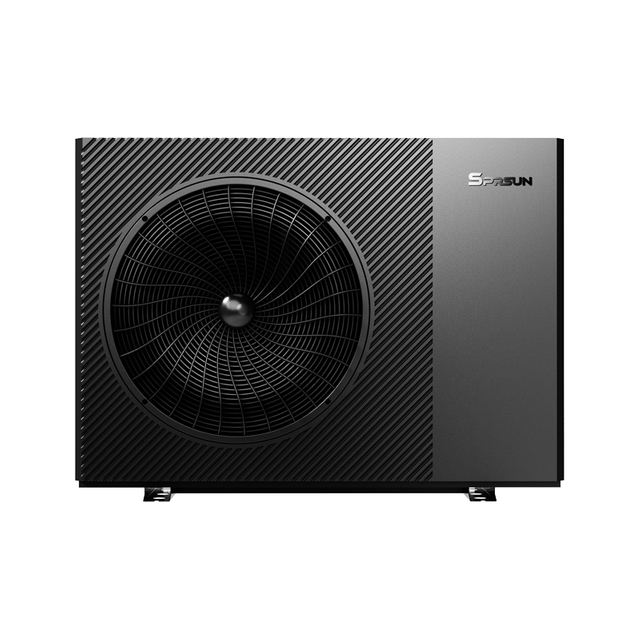 | R290 Greenergy Pro Series - 9-12KW ERP A+++ DC Inverter Air Source Heat Pumps |
 | R290 Greenergy Series - 50KW/100KW Commercial Inverter Heat Pumps |
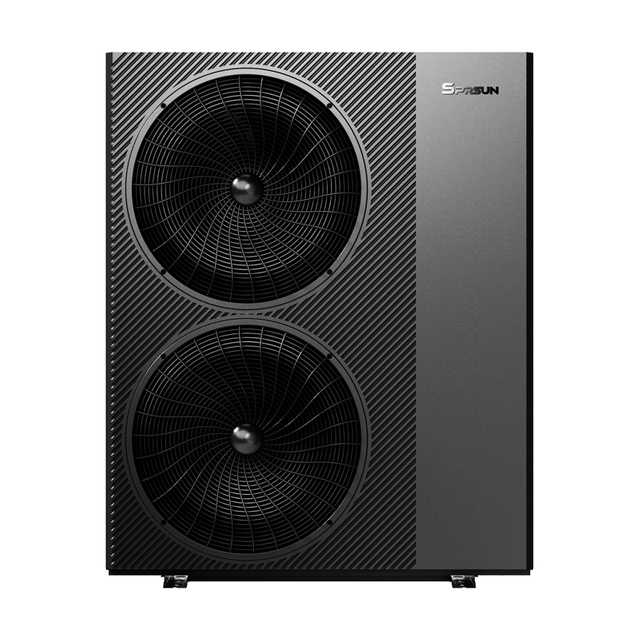 | R290 Greenergy Pro Series - 15-18KW ERP A+++ DC Inverter Air Source Heat Pumps |
 | Combo Series -10KW/12KW Monoblock Commercial Hot Water Heat Pump |
 | R290 AquaHero Series- All in One Hot Water Heat Pump |