Views: 70 Author: Site Editor Publish Time: 2026-05-18 Origin: Site
Outline
· The Commercial Heat Pump Market Outlook
· European Subsidies for Commercial Heat Pumps
· Application Scenarios and Sizing Guidance
· Product Spotlight: SPRSUN R290 Commercial Heat Pumps
· FAQ
· Conclusion
______________________________________________________________________________
“How large is the commercial heat pump market today, and does it represent a strong investment opportunity?”
“Why are commercial heat pumps increasingly becoming a strategic priority for businesses?”
“Which countries are providing the strongest policy and financial support in 2026?”
“How can you choose a system that will operate quietly and efficiently over a 15–20 year lifespan?”
This guide is designed to cut through complexity by organizing key considerations into clear, structured sections—enabling confident and well-informed investment decisions
The global heat pump market was valued at $93.52 billion in 2025 and is projected to grow from $100.18 billion in 2026 to $211.93 billion by 2034, representing a compound annual growth rate (CAGR) of 9.82% over the forecast period. The commercial heat pump market is valued at approximately $15.8 billion and is expected to grow significantly, reaching $45.68 billion by 2035, with a compound annual growth rate (CAGR) of 11.2%. The industry size of commercial heat pumps is evaluated at about $17.39 billion. Meanwhile, the European HVAC market is on a strong upward trajectory. This comes to an additional 20 million heat pumps by 2026 and 60 million by 2030. (Dates reference: European Heat Pump Association)

Energy Price Volatility: Following the geopolitical events that unfolded in early 2026 (which led to the closure of the Strait of Hormuz due to tensions between the United States, Israel, and Iran)in early 2026, European natural gas futures spiked to nearly €52 per megawatt-hour by mid-March, an increase of 84% since the start of the year. For the 78% of EU heating systems still burning fossil fuels, this volatility creates a powerful financial incentive to electrify.
Regulatory Certainty: The EU's revised Energy Performance of Buildings Directive mandates zero-emission standards for new public buildings from 2028 and all new buildings from 2030. Furthermore, F-gas regulations are tightening, pushing the industry toward low-GWP natural refrigerants like R290 (propane).
Market Recovery: Driven by growth in 12 of 16 European markets, total sales reached approximately 2.62 million units. After a brief dip in 2024, heat pump sales across 16 European countries rebounded by 10% in 2025. This brings the total installed base of heat pumps in Europe to around 28 million units. The sector is expected to double in size by 2030.
BEG - Bundesförderung für effiziente Gebäude
According to the latest policies for 2026, subsidies are primarily divided into three categories: BEG EM (individual measures), BEG NWG (building-wide renovation/new construction), and BEG WG/NWG Heizung (heating systems).
(1) Heat Pumps and Commercial Heating Systems (KfW 522)
Applicable to the replacement of commercial heat pumps, biomass boilers, or solar thermal systems.
• Basic Subsidy (Grundförderung): Covers 30% of the purchase and installation costs.
• Energy efficiency subsidy: An additional 5% subsidy is available if the heat source uses water, geothermal energy, wastewater, or natural refrigerants (such as R290 propane).
• Acceleration Bonus (Klimageschwindigkeits-Bonus): 20% (for early replacement of old gas/oil boilers; this bonus will be phased out after 2028).
• Upper Limit: The total subsidy rate is generally capped at 70%.
France focuses not only on residential buildings but also provides specific support for high-capacity commercial heat pumps.
The subsidy system for commercial heat pumps (commercial PAC units) is primarily based on energy efficiency improvements and the use of renewable energy sources. For businesses and the public sector, the subsidy policies differ from those of the residential sector’s MaPrimeRénov’ program and are mainly based on the CEE (Energy Saving Certificate) and specific tax incentives.
Energy Savings Certificate Scheme (Certificats d’Économies d’Énergie, CEE)
The most common source of subsidies for commercial heat pumps is the CEE scheme. Under this program, obligated parties—primarily energy suppliers such as EDF and TotalEnergies, including providers of electricity, natural gas, LPG, heating, cooling, and fuel distribution—are required to fund their customer’s energy-saving projects:
Scope of application: Office buildings, hotels, industrial facilities, shopping centers, etc.
Relevant Standards (Standard Operating Procedures):
BAT-TH-113: Applies to “air-to-water (Air-Eau) or water-to-water (Eau-Eau)” heat pumps installed in commercial buildings.
BAT-TH-157: Applies to heat pump-driven hybrid boilers
*Legal Basis: Articles R221-1 through R221-30 of the French Energy Code (Code de l'énergie). This system was established by the 2005 POPE Act (Loi n°2005-781).
Investeringssubsidie duurzame energie,ISDE
Indicative ISDE 2026 Subsidies for Heat Pumps (First Unit):
Base Amount: Approximately €1,025 fixed per application.
Capacity-based: ~€225 per kW of thermal power.
Bonus: A €200 bonus for A+++ energy label systems.
Bonus Benefits
Energy Investment Deduction (EIA): Allows companies to deduct 40% of the cost of energy-efficient assets from their taxable profits.
District Heating Co-Funding
Up to 65% of investment for small businesses; max grant €30M.
As part of its decarbonization and energy efficiency efforts, Slovenia launched a €51.2M cofunding package for companies and cooperatives.
Small & Micro Enterprise Support: Up to 65% of investment costs can be co-funded.
Mid-Sized Enterprises: Up to 55% of investment.
Large Enterprises: Up to 45% of investment.
Accessing Increased Government Financial Support
On 27 February 2026, the European Commission has approved a €78M Slovenian support scheme aimed at partially offsetting higher electricity costs for energy-intensive industries resulting from carbon pricing under the EU Emissions Trading System (ETS).
The scheme will cover up to 75% of eligible indirect emission costs incurred between 2025 and 2027. Payments will be issued in the subsequent year, with the final disbursement scheduled for 2028 to compensate costs incurred in 2027.
As part of the larger Competitiveness and Innovation in Enterprises Programme (CIEP) 2021-2027, Bulgaria Enterprise EE Program Grants up to €50,000 covering 65% of costs .
Funding Amount: Grants range between approximately €15,000 (roughly 30,000 levs) and €50,000 (100,000 levs) per enterprise.
So far, 1,300+ companies approved by the Bulgarian Ministry of Innovation and Growth.
1. Plan around limited budgets (First-come, first-served budgeting):
In many countries, cash subsidies—such as the ISDE in the Netherlands and the Boiler Upgrade Scheme in the UK—are allocated on a first-come, first-served basis and subject to annual caps. Once funds are exhausted, applications typically close until the next funding cycle.
2. Prepare for evolving incentives:
As the heat pump market matures, governments are gradually scaling back subsidies for individual units. In their place, support is increasingly directed toward smart system integration and large-scale industrial or commercial projects.
3. Timing:
Before committing to a purchase, be sure to confirm any pre-approval or eligibility requirements with your local energy authority to avoid delays or missed funding opportunities.
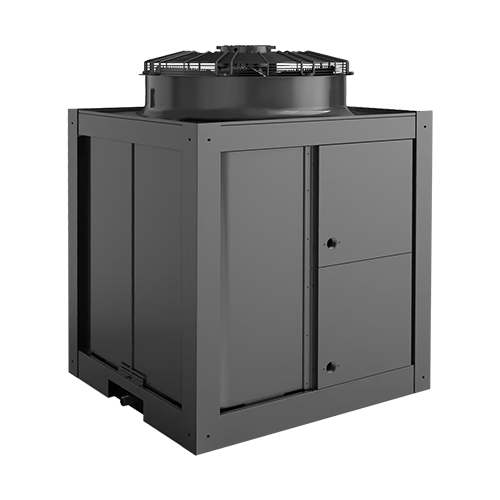
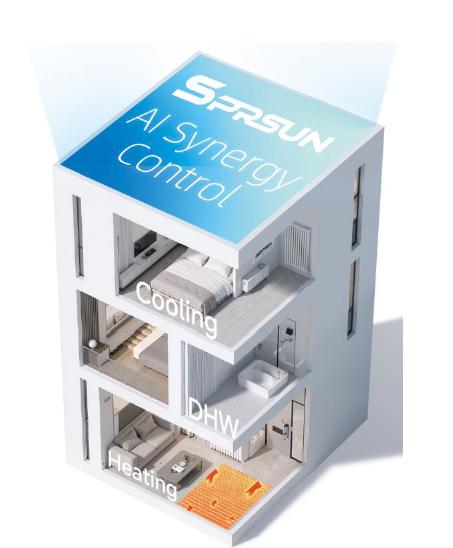
In the HVAC industry, evaluating the commercial heat pump performance goes beyond simply assessing whether a system can achieve the required cooling or heating capacity. It involves a comprehensive analysis of efficiency, reliability, and the ability to operate consistently across varying environmental conditions.
1. Energy Efficiency Metrics:
COP (Coefficient of Performance): The coefficient of performance. It indicates the amount of heat generated per unit of power consumed.
SCOP / SEER: Seasonal Coefficient of Performance. This metric accounts for the impact of seasonal temperature fluctuations on energy efficiency.
2. Performance in Low-Temperature Environments (Heating Capacity):
Minimum operating ambient temperature: The lowest temperature at which the machine can start up and operate
Outlet temperature: For ATW system heat pumps, can they still provide hot water at temperatures above 55°C (for terminal heating) at low ambient temperatures?
3. Core component Tech
Compressor: Scroll, screw, or even centrifugal (for large chillers).
Throttling component: Accuracy and control range of the electronic expansion valve (EEV).
4. Reliability Control System Design
High-redundancy design: supports multi-module configurations.
Proper Defrost Logic: Avoid frosting that may affect machine performance or even cause damage.
Remote monitoring interfaces: Quick and easy after-sales maintenance and technical support response.

Product Spotlight:
Exceptional Efficiency Ratings A+++
ERP Energy Rating: A+++
COP 3.8
SCOP: 4.54
SPRSUN'S Fourth-Generation AI Control (HeatPro+)
Self-optimizing logic adapts to outdoor ambient temperature and load demand.
Controller supports 25 international languages,
AI Smart Defrost Tech (Non-Stop Heating)
Utilizes Dual Air Channels and Dual Pressure Sensors.
Continuous Heating: Defrost cycles do not interrupt hot water or space heating output, eliminating the "cold blow" associated with standard heat pumps.
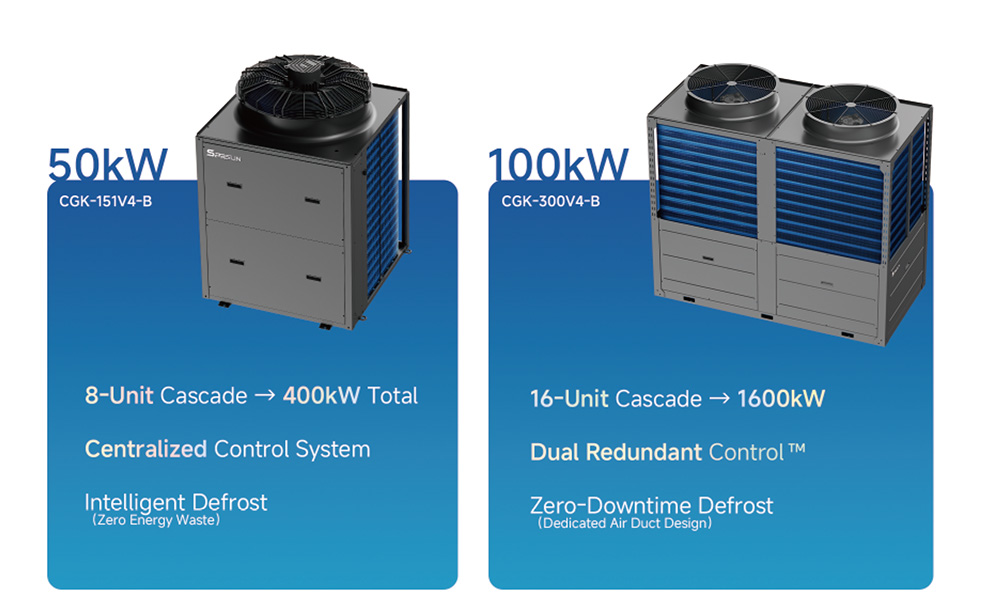
Scalable Cascade Architecture
PID System Auto-Calculation for seamless load balancing.
Supports up to 16 units connected in parallel.
Delivers up to 1,600 kW of combined heat output—suitable for district heating and large industrial facilities.
Proactive Safety Systems
Integrated Refrigerant Probe: Continuously monitors R290 concentration.
Automated Response: If levels approach threshold, ventilation fans activate automatically, and a remote alert is sent to the building management system.
Premium Component
Compressor: HITACHI DC Scroll inverter compressor
Valves: SANHUA 4-Way Valve & FUJIKOKI Electronic Expansion Valve.
Fans: LEKVA / Match-well DC Fans for quiet, efficient airflow.
Advanced Noise Reduction Tech
Silent Cabin Tech: Reduces overall sound emissions by 20%.
Acoustic Isolation Compartment Tech: Physically separates vibration sources from the chassis.
Multi-Layer Composite Acoustic Encapsulation: Absorbs operational sound across the spectrum.
Extreme Climate Performance
Ultra Low Temperature Uninterrupted Operation: Certified for continuous use from -25°C to 45°C.
Intelligent Anti-Freeze: System automatically selects the appropriate freeze protection level based on real-time outdoor conditions.
SPRSUN R290 Commercial Heat Pump Module Selector
SPRSUN R290 COMMERCIAL 100 kw DC INVERTERH HEAT PUMP SELECTER | ||||
Model | When heat load | 60W | When heat load | 80 W |
Area m² | Area m² | |||
CGK-300V4-B | Lowest ambient temp -7°C | |||
≤ | 1175 | ≤ | 881 | |
Lowest ambient temp.-15℃ | ||||
≤ | 933 | ≤ | 700 | |
Lowest ambient temp.-20℃ | ||||
≤ | 820 | ≤ | 615 | |
Q:What types of installation projects are commercial units suitable for?
A: SPRSUN commercial heat pump designed for multi-family housing, offices, schools and other higher-demand settings,
Q: What applications are commercial heat pumps best suited for in buildings?
A: SPRSUN commercial heat pumps are designed for a wide range of applications, including multi-family residential buildings, office facilities, schools, and other high-demand setting project.
Q: Is R290 (Propane) safe for a commercial building?
A: Yes, when installed with proper engineering controls. SPRSUN systems include integrated refrigerant leak detection and automatic ventilation activation as standard features. These safety protocols meet and exceed the stringent EU standards for A3 refrigerants in commercial applications.
Q: What level of water resistance can commercial heat pumps provide for outdoor installations?
A: SPRSUN’s commercial heat pumps have an IPX4 rating. The Ingress Protection (IP) rating ) is specifically designed to measure dust and water resistance. An IPX4 rating is generally sufficient for outdoor installations, ensuring the unit can withstand splashes, immersion, and rain from any direction under natural conditions. However, please note that the unit cannot withstand the impact of high-pressure water jets, as this may damage internal components.
Q: Do commercial heat pumps support integrated intelligent control and remote management?
A: Sure. SPRSUN’s commercial heat pump systems are equipped with advanced intelligent control and connectivity features:
· Inverter technology: Enables precise temperature regulation and optimized energy use.
· Flexible operating modes: Including Turbo, ECO, Sleep, and High-COP, allowing the system to adapt to varying ambient conditions and user requirements.
· Integrated control system: A proprietary controller supports coordinated management of heating and domestic hot water.
· IoT-enabled remote access: The HEAT PRO (IOT)platform allows users to monitor and control the system via a touchscreen interface or a mobile app (iOS and Android), enabling efficient, centralized system management.
Q: Are commercial units suitable for larger construction projects?
A: Yes, SPRSUN R290 commercial heat pump 100kw units support up to 16 units in a cascade function, allowing for greater scalability and customization to fit various commercial needs, enabling businesses to optimize their heating and cooling solutions based on demand.
Q: How do I choose the right heat pump supplier?
A: Choosing a supplier with all necessary qualifications and a comprehensive order management system covering the entire lifecycle—from pre-sales to after-sales—will best protect the mutual interests of both parties. SPRSUN offers comprehensive support throughout the product lifecycle, including technical, sales, and after-sales services, ensuring high customer satisfaction.
The commercial heating landscape in Europe is shifting faster than ever. The combination of high SCOP efficiency, natural R290 refrigerant, and intelligent cascade control is making legacy boiler systems economically obsolete.
With subsidy budgets in Germany, France, the Netherlands, and Luxembourg confirmed through 2026, the financial case for upgrading is compelling. Waiting not only means missing out on these incentives but also exposes your business to unpredictable gas prices and tightening carbon compliance costs.
By focusing on the key parameters outlined above—and selecting equipment engineered for real-world European conditions like the SPRSUN R290 platform—you ensure a transition that is smooth, quiet, and financially sound for decades to come
Contract us for more information
Email : marketing@sprsunheatpump.com
Phone: +86 189 3398 5692
_____________________________________________________________________

SPRSUN, as a credible and reliable heat pump manufacturer, has been committed to promoting environmental protection and sustainable development of new energy business for over 27 years, has emerged as a leading provider of green energy solutions and a national high-tech enterprise, developing high-efficiency heat pump technology, focusing on creating energy-saving value and comfortable life by providing high-quality, energy-efficient solutions to meet the growing demand for sustainable heating and cooling systems. Our commitment to innovation and customer satisfaction has allowed us to build lasting partnerships across Europe and beyond.