Views: 129 Author: Site Editor Publish Time: 2026-03-09 Origin: Site

1. Introduction: The Wake-Up Call
2. The New Energy Reality: Oil Prices Surge After Middle East Conflict
3. Heat Pump vs. Boiler : The Efficient Alternative Cost Comparison
4. Future-Ready Tech: R290 Heat Pump and Solar Integration
5. Conclusion: Secure Your Energy Future Today
February 28, 2026, United States: Israel carried out a joint military strike against Iran. Tehran subsequently threatened to block the Strait of Hormuz, a narrow waterway serving as the “world's oil valve” through which 20% of global oil and nearly all of Qatar's liquefied natural gas flows. Days later, Iran's Islamic Revolutionary Guard Corps announced that an oil tanker attempting to transit the strait on March 1 had been struck and sunk. This marked Iran's first concrete action following its declaration, accompanied by a warning that any attack on Iranian oil and gas facilities would result in the destruction of such infrastructure across the entire region. Consequently, analysts warn that a blockade of the Strait of Hormuz would significantly impact the global energy market.
The mere threat of disruption to maritime supply chains has been sufficient to push Brent crude oil prices above $82 per barrel—a level not seen since the summer of 2025. For decades, households and business owners have viewed energy prices as cyclical headaches. And this crisis reveals deeper vulnerabilities inherent in traditional fossil fuels; it exposes the fundamental fragility of supply chains reliant on volatile regions. For households and businesses dependent on fossil fuels, this is not merely another price spike. It is a stark warning: the growing financial and security risks stemming from our reliance on oil and gas.
This article aim to explores how the latest Middle East conflict is reshaping global energy dynamics, and why transitioning to modern HVAC solutions—particularly heat pumps using R290 refrigerant integrated with solar technology—is no longer merely an eco-friendly choice, but the most prudent economic decision for 2026 and beyond. We will explain why switching to heat pumps represents your wisest investment for 2026. We will help you analyze the data, the technology, and how to best protect yourself from future energy shocks.
Escalating tensions in the Middle East have driven oil and gas prices sharply higher. On March 2, the international benchmark Brent crude price surged by as much as 13% before retreating slightly from last week's levels. U.S. crude prices also rose by over 6.5%. Natural gas prices soared by 50%, primarily due to Qatar Energy, a major gas producer, halting production after its facilities were attacked by Iranian drones. Other shipping companies have rerouted vessels around the southern tip of Africa to avoid the conflict, with experts warning this could lead to increased transportation costs and delays.
Fuel Oil Boilers (Relevance: 95%+): Already vulnerable to price volatility, threats in the Strait of Hormuz have introduced a permanent risk premium. Additionally, supply logistics become challenging; waiting for deliveries when tanks are low exposes you to spot prices that can spike instantly on bad news from the Gulf region.
Propane(LPG)Boilers (Relevance: 80%-90%): Commonly used in off-grid homes. Although propane operates in a separate supply-demand market, its price floor is determined by oil. Its pricing is linked to global natural gas markets, which are tightening due to potential delays in European LNG shipments caused by disrupted shipping routes.
Gas Boilers (Correlation: 40%-60%): Even this type of boilers connected to national pipelines are not immune. Even though natural gas (methane) and oil originate from different geological sources, they are often linked to oil prices in long-term contracts. As the International Monetary Fund notes, every 10% increase in oil prices pushes global inflation up by 0.4%. Wholesale natural gas prices follow oil prices, and your utility bills will rise accordingly.
The recent conflict has laid bare the structural weaknesses of traditional heating systems. If you rely on a boiler—whether oil, gas, or propane(LPG)—your energy costs are now directly tied to the geopolitical temperature of the Middle East. Every time tensions flare in the Middle East, you pay the price. Closures or even partial restrictions of the strait affect more than just “gasoline”; they also impact petrochemical products, plastics, and the fuel oil itself that keeps industries running. Insisting on using boilers means anchoring your household budget to the world's most volatile region.
In stark contrast, a Heat Pump offers a path to energy independence. By using electricity to move heat rather than burning fuel to create it, Heat Pump technology breaks the direct link between your heating bill and the global fossil fuel market.
Modern HVAC systems, particularly Air Source and Ground Source Heat Pumps, achieve efficiencies that boilers cannot touch. While a top-tier condensing boiler might hit 90-94% efficiency, a Heat Pump routinely achieves a Seasonal Coefficient of Performance (SCOP) of 3.5 to 4.5—meaning it delivers 350% to 450% more energy as heat than it consumes as electricity.
With oil prices hovering around $85 per barrel and electricity rates remaining relatively stable across countries due to the growing market acceptance of renewable energy, the financial picture is becoming increasingly clear.
Case Study: Consider a typical household requiring approximately 15,000 kilowatt-hours of heat annually:
System | Efficency/SCOP | Energy Input Required | Fuel/Energy Unit Price Forecast (Euro.) | Annual Running Cost (Euro) |
Old Oil Boiler | 70% | 21428 kWh (oil) | £ 1.25/L(about 0.12/kwh) | £2571 |
LPG Boiler | 88% | 16667 kWh | £ 0.13/kwh | £2166 |
Gas Boiler | 90% | 16304 kWh | £ 0.09/kwh | £1467 |
Air Source Heat Pump | 320% (SCOP 3.5-4.5) | 4688 kWh | £0.26/kwh | £1219 |
(*Energy costs vary by country and region; Data for reference only and are not guaranteed.):
As a result: Compared to an old oil boiler, a heat pump saves you over £1,400 annually; compared to a gas boiler, it saves £500 to £800 per year.
Should oil prices rise further, these savings will only increase. Moreover, as many countries raise carbon taxes, fossil fuel heating will become increasingly expensive.
Air energy and solar energy, as two major natural resources, possess two core advantages:
1. Unlimited renewable energy
2. Free access
Unlike non-renewable fossil fuels such as petroleum, heat pumps remain unaffected by international political developments.
To maximize these benefits, the HVAC industry is converging on two critical innovations: R290 Refrigerant and Solar Integration.
Older heat pumps use refrigerants like R410A, which have a high global warming potential (GWP) and are being phased out under EU F-Gas regulations. R290 (propane) is different:
GWP=3 – environmentally friendly and exempt from phase-downs.
High performance – delivers flow temperatures up to 70°C even at -15°C outside, so it works with existing radiators.
Cost-effective – propane is cheap and widely available.
As its production sources highly overlap with crude oil, propane prices typically maintain a strong positive correlation with international oil prices (such as WTI or Brent). Propane (the primary component of LPG) is a byproduct of petroleum extraction and refining. When international oil prices rise, the procurement cost of propane increases accordingly, directly driving up the production cost of R290. However, such changes are typically short-lived and one-time occurrences. Thus, there is no need to over-worry about it
The Comparison of R290 Heat pump and LPG boiler
Feature | R290 Heat Pump (Thermal Cycle) | Propane Boiler (Chemical Combustion) |
The role of propane | Heat transfer medium. Continuously circulating within a closed-loop system | Fuel. Chemical energy is released through the direct combustion of propane, heating the water circulation via a heat exchanger. |
Thermal Efficiency (COP) | At 3.0–5.0, this means that consuming 1 kilowatt-hour of electricity can generate 3 to 5 kilowatt-hours of heat. | Even the most advanced condensing boilers typically achieve thermal efficiency between 90% and 98%. This means that for every unit of energy consumed, the heat output will always be less than one unit. |
Impact of rising oil costs | Sensitivity < 5%. The R290 refrigerant requiring only a single initial charge with no need for replenishment during subsequent operation. The heat pump system consumes electrical energy. Operating costs may only see a slight indirect increase when rising oil prices impact electricity generation costs (and where local power generation primarily relies on fuel oil). | Sensitivity > 80%, high fuel consumption (every joule of heat comes from combustion). For every 10% increase in international oil prices, your heating bill will rise by nearly 8%-10% almost immediately. |

Pairing a heat pump with solar PV or thermal panels cuts grid reliance and lowers bills even further.
Solar PV + heat pump: Generate your own electricity to run the heat pump. Studies show this can reduce energy bills by up to 55% and grid dependence by 75%.
PVT (Photovoltaic-Thermal) systems: Combine electricity generation with heat capture. Large-scale projects have achieved a SCOP of 8.5.
SPRSUN’s R290 Greenergy Pro Series, combined with PV Ready
Other Core advantages:
Smart control system: IoT Remote Control Platform & OTA Upgrades ;
Multilingual interface: Over 25 language Options.
Wide range of ambient temperature performance: Stable running at -25°C~43°C, Maximum. 75°C hot water production.
High Energy Efficiency: EU Energy Efficiency Classes A+++ in both 35°C and 55°C.
Superior Quiet Experience:

Quality Guarantee:

The conflict between the U.S., Israel, and Iran is a tragic event and a sobering reminder: the risk index for heating with fossil fuels is escalating at an unimaginable pace. Heat pumps offer a bright alternative—they are efficient, cost-effective, economical, and can help you achieve energy independence.
So don't wait for the next price shock. The smart move is to change now!
Explore Interest in our range of heat pumps and solar-compatible HVAC systems. Contact us for a free consultation and find out how much you can save:
Email: marketing@sprsunheatpump.com
Phone: +86 189 3398 5692
_____________________________________________________________________
SPRSUN – Your Trusted Partner in Heat Pump Solutions.

SPRSUN, as a credible and reliable Chinese heat pump manufacturer, has been committed to promoting environmental protection and sustainable development of new energy business for over 26 years, focusing on creating energy-saving value and comfortable life by providing high-quality, energy-efficient solutions to meet the growing demand for sustainable heating and cooling systems. Our commitment to innovation and customer satisfaction has allowed us to build lasting partnerships across Europe and beyond.
| Image | Product Name |
|---|---|
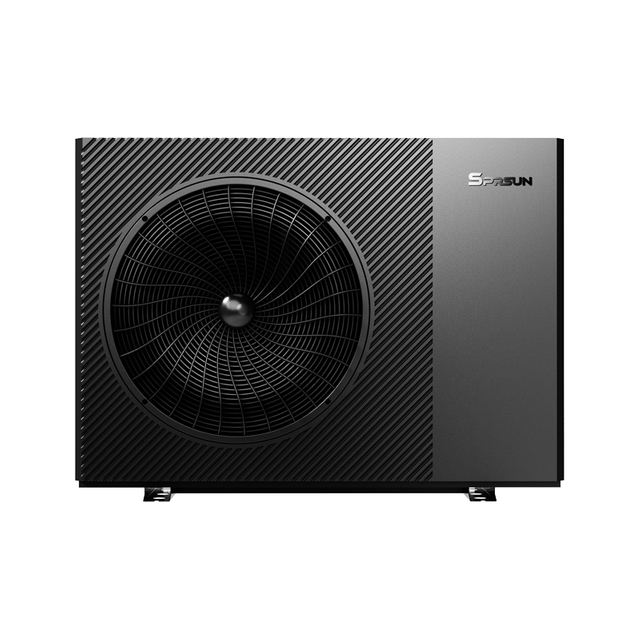 | R290 Greenergy Pro Series - 9-12KW ERP A+++ DC Inverter Air Source Heat Pumps |
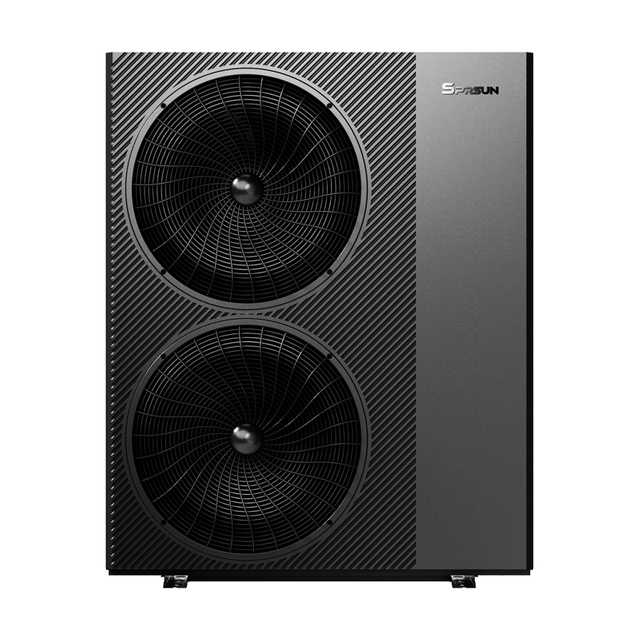 | R290 Greenergy Pro Series - 15-18KW ERP A+++ DC Inverter Air Source Heat Pumps |
 | R290 Greenergy Series - 50KW/100KW Commercial Inverter Heat Pumps |
 | Ocean Series - 6.5KW-39KW R32 Inverter Air Source Heat Pump for Swimming Pools |
 | R290 AquaHero Series- All in One Hot Water Heat Pump |