Views: 3 Author: Site Editor Publish Time: 2026-11-27 Origin: Site
When selecting a monobloc air-to-water heat pump, one important factor to consider is whether the unit comes with a built-in water circulation pump. Both configurations can provide heating, cooling, and domestic hot water (DHW), but they differ in hydraulic design, installation requirements, and system flexibility.
This article explains the key differences between built-in and external circulation pumps, including their advantages, limitations, and selection considerations, helping distributors, installers, and project developers choose the right solution.
A monobloc heat pump with a built-in water pump is generally more convenient for standard residential installations because it reduces separate component procurement and simplifies installation.
A model without a built-in pump offers greater flexibility for customized hydraulic systems, particularly those involving multiple circuits, long pipe networks, or specific pump performance requirements.
The right choice depends on the required water flow rate, total dynamic head, system layout, and installation requirements.

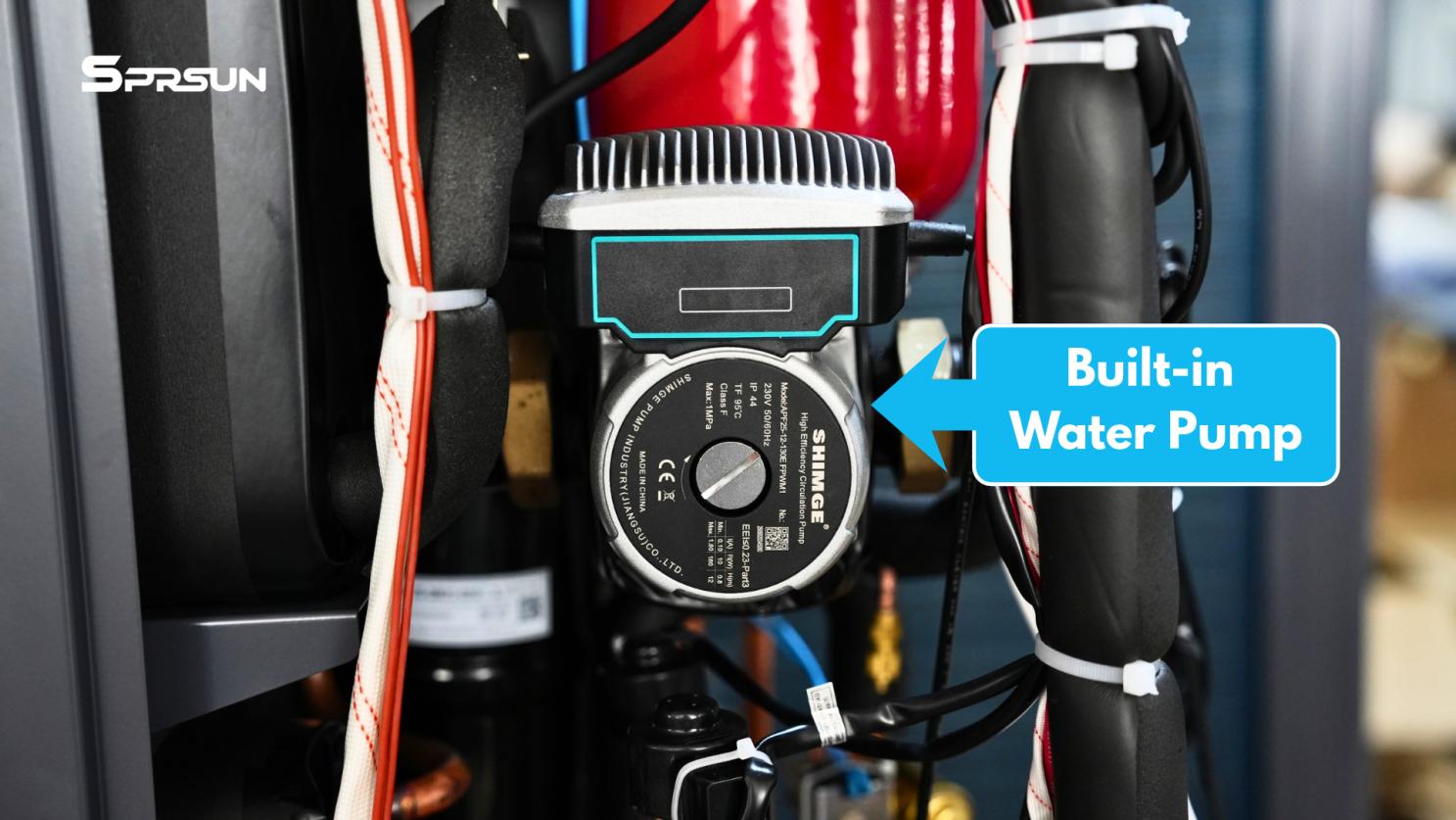
An integrated water pump circulates water between the heat pump and the building's heating or cooling system. Since the circulation pump is already installed inside the unit, fewer external components are required.
Simplified Installation: No need to purchase and install a separate circulation pump, reducing additional installation work.
Compact System Design: Integrating the water pump into the heat pump saves installation space and reduces the need for external piping and equipment.
Manufacturer-Matched Components: The built-in circulation pump is selected to match the heat pump's hydraulic design and specified operating conditions, helping ensure compatibility within the unit.
Integrated Pump Control: The circulation pump can be coordinated with the heat pump's control system, allowing its operation to be managed as part of the overall heating or cooling process.
Reduced Procurement Complexity: Distributors and installers can source the heat pump with its circulation pump already integrated, reducing the need to purchase and coordinate separate pump components.
Residential heating and cooling projects, standard hydraulic configurations, space-limited installations, and projects where installation simplicity is a priority.
In this configuration, the heat pump does not include an internal circulation pump. Instead, an external water pump is selected and installed as part of the hydraulic system.
This design provides greater freedom when configuring the overall heating system.
Greater System Flexibility: Installers can select an external circulation pump based on the required water flow rate and pump head of the project.
Customized Hydraulic Design: The external pump can be sized and integrated according to the system layout, including multiple heating circuits, buffer tanks, and different piping configurations.
Independent Maintenance: Since the circulation pump is installed separately from the heat pump, it can generally be inspected, serviced, or replaced without accessing the unit's internal hydraulic assembly.
More Control Over Component Selection: System designers can choose their preferred pump brand, model, and performance specifications to meet project requirements.
Better Adaptability for Complex Hydraulic Systems: This configuration is particularly useful for commercial buildings, large residential projects, and systems with multiple heating zones or higher hydraulic resistance.
Projects requiring customized hydraulic configurations, complex piping networks, external pump integration, or greater freedom in component selection.

Comparison | Built-in Water Pump | External Water Pump |
Pump installation | Integrated into the heat pump | Requires separate external installation |
Installation requirements | Generally simpler | Requires additional pump installation |
System configuration | More compact | More flexible |
Pump selection | Manufacturer-selected | Selected according to project requirements |
Hydraulic customization | Subject to built-in pump specifications | Greater freedom in pump selection |
Maintenance | May require access to internal components | Generally easier to access independently |
Procurement | Fewer separate components to source | Requires separate pump procurement |
Typical applications | Standard residential systems | Customized and complex hydraulic systems |
Neither configuration is universally better. The right choice depends on your actual project requirements.
Here are four important factors to evaluate:
① Required and Minimum Water Flow Rate
Check the heat pump manufacturer's specified water flow range, including the minimum required flow rate. Ensure that the circulation pump, whether built-in or external, can maintain sufficient flow under actual operating conditions. Even with a built-in pump, its available flow rate and head must be checked against the system's actual hydraulic requirements.
The pump's performance curve should also be checked to ensure that it can deliver the required water flow rate at the system's total dynamic head, rather than relying on its maximum flow rate alone.
② Total System Pressure Drop
Consider the hydraulic resistance of the entire water circuit, including piping, valves, filters, heat exchangers, and other system components.
The selected pump must provide sufficient flow at the required total dynamic head. For systems with multiple heating circuits or long pipe runs, additional hydraulic calculations may be necessary.
③ System Complexity
For a standard residential installation, an integrated pump can simplify the overall design. For systems involving multiple heating zones, buffer tanks, or long piping networks, an external pump may offer more design flexibility.
④ Installation and Maintenance Requirements
Consider available installation space, local installation practices, maintenance accessibility, and the preferences of your installers.
One important reminder: A built-in water pump does not automatically guarantee sufficient water flow for every project. Its actual performance must still be checked against the system's hydraulic requirements.
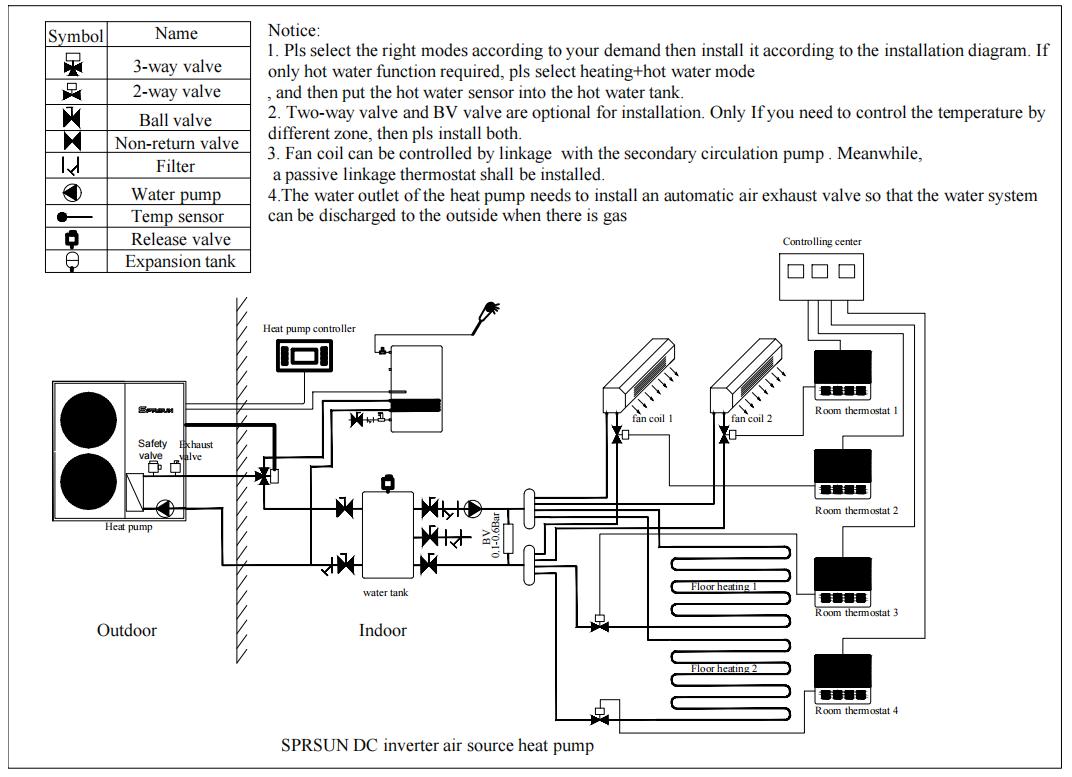
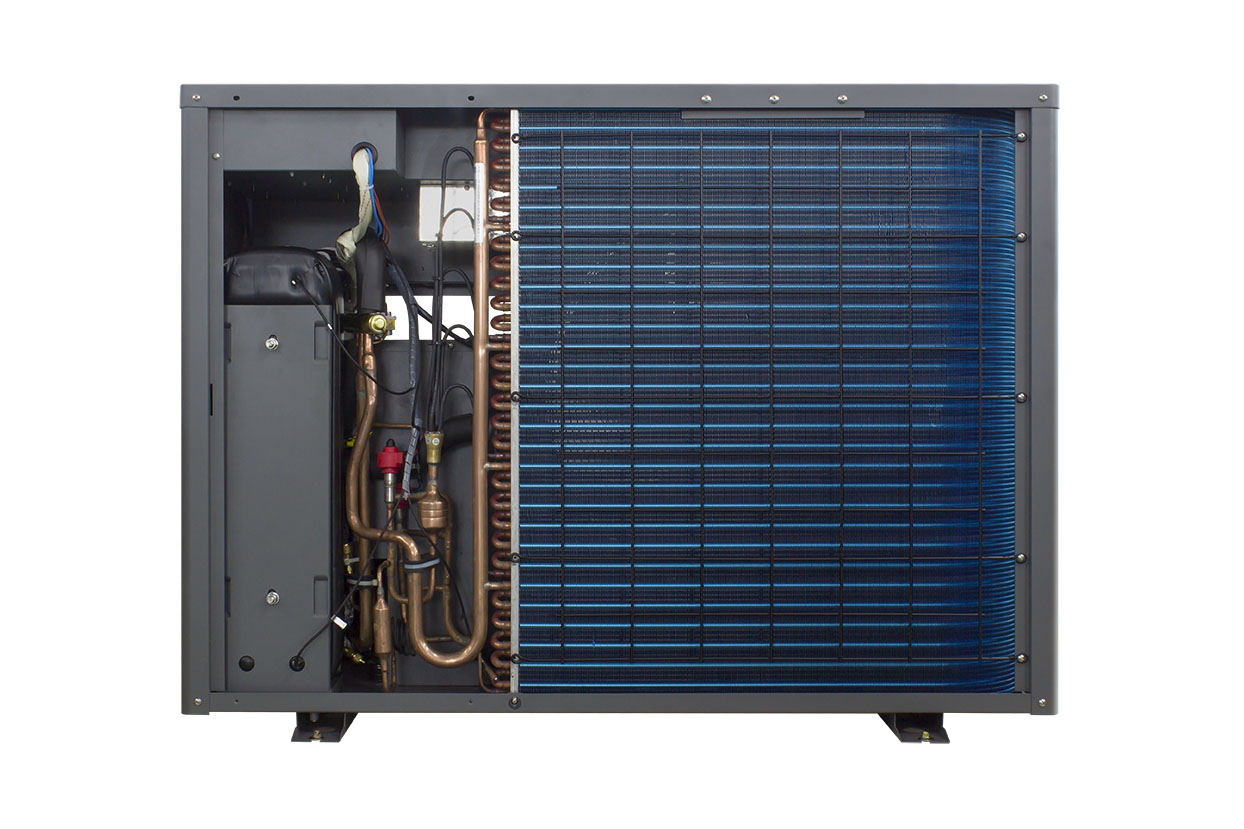
SPRSUN offers monobloc air-to-water heat pumps with different hydraulic configurations for residential, light commercial, and commercial applications. Depending on the model, the circulation pump may be integrated into the unit or installed externally to meet the hydraulic requirements of the overall system.
Selected SPRSUN monobloc heat pumps feature an integrated circulation pump, simplifying component procurement and installation. Pump specifications vary by model and heating capacity, as shown below.
Product Series | Built-in Pump Model | Maximum Pump Head | Allowable Water Flow |
9 kW R290 Series | UPM4XLK 25-90 130 | 9 m | 0.28–0.92 L/s |
18 kW R290 Series | UPM10L 25-105 130 | 10.5 m | 0.46–1.47 L/s |
R290 Greenergy Evo Series | APM25-9-130 / APF25-12-130E | 9–10.5 m | 0.31–1.51 L/s |
R290 Greenergy Series | APM25-9-130SPWM1 / APF25-12-130E FPWM1 | 9–12 m | 0.19–1.19 L/s |
Clima Pure R32 Series | Integrated pump | Refer to model-specific documentation | 0.26–3.10 L/s |
For example, the 9 kW R290 model uses a UPM4XLK 25-90 130 pump with a maximum head of 9 m, while the 18 kW model uses a UPM10L 25-105 130 pump with a maximum head of 10.5 m.
Explore SPRSUN Products:
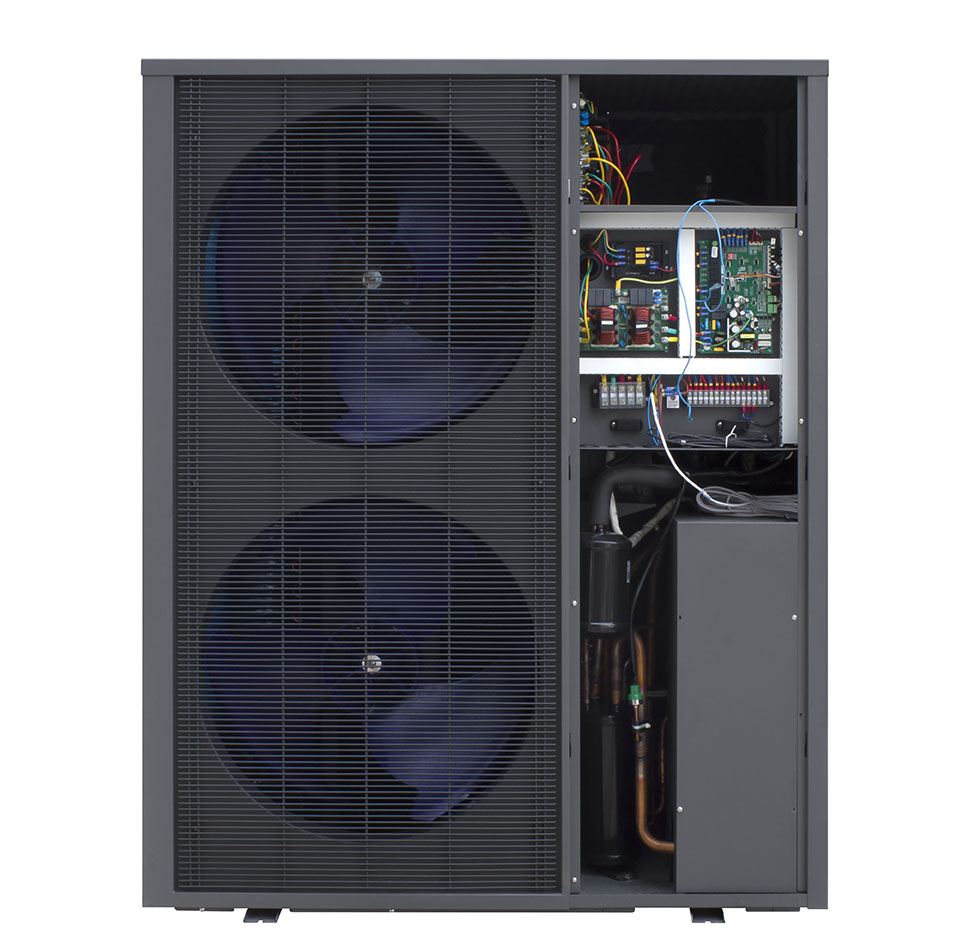
SPRSUN also offers monobloc heat pumps without an integrated circulation pump. These models require a separately installed external pump, allowing installers to select a suitable pump according to the hydraulic requirements of the complete system.
The following table shows the allowable water flow and water-side pressure drop of selected models.
Product Series | Built-in Pump | Allowable Water Flow | Water Pressure Drop |
R32 Small Cold Climate Series (6–15 kW) | No | 0.18–1.26 L/s | 15–21 kPa |
R290 Greenergy Light Commercial Series (25–30 kW) | No | 0.75–2.39 L/s | 30–35 kPa |
R290 Greenergy Commercial Series (50–100 kW) | No | 1.49–7.96 L/s | 60–63 kPa |
Water pressure drop represents the pressure loss across the heat pump's internal water circuit. It should be included when calculating total system resistance.
The external pump must be selected to deliver the required flow rate at the total dynamic head of the complete system, accounting for resistance from piping, valves, filters, heat exchangers, and other components.
R32 EVI Clima Series Heat Pump 6-15KW
Maximum Pump Head: The maximum head the integrated pump can provide. Actual available head varies with the operating flow rate.
Allowable Water Flow: The specified water flow range across the listed models. Actual limits vary by model.
Water Pressure Drop: The pressure loss across the heat pump's internal water circuit, which must be considered when sizing an external pump.
Note: Specifications vary by model. Always refer to the relevant product datasheet for exact operating limits and pump performance. External pumps must be selected separately based on the complete system's flow and head requirements.
In addition to heat pump units, SPRSUN provides pre-configured heat pump kits with complementary hydraulic and electrical components.
Depending on the configuration, these kits can include Grundfos or Shinhoo circulation pumps, three-way valves, filters, expansion tanks, electrical control boxes, and other installation components. By supplying compatible components together, SPRSUN helps reduce separate sourcing requirements and simplify system installation.
SPRSUN also offers integrated hydronic tanks, buffer tanks, and fan coil units for heating, cooling, and domestic hot water applications, helping distributors and installers source multiple components for their projects from one supplier. Customization options for electrical control boxes and hydraulic modules are also available for selected configurations.
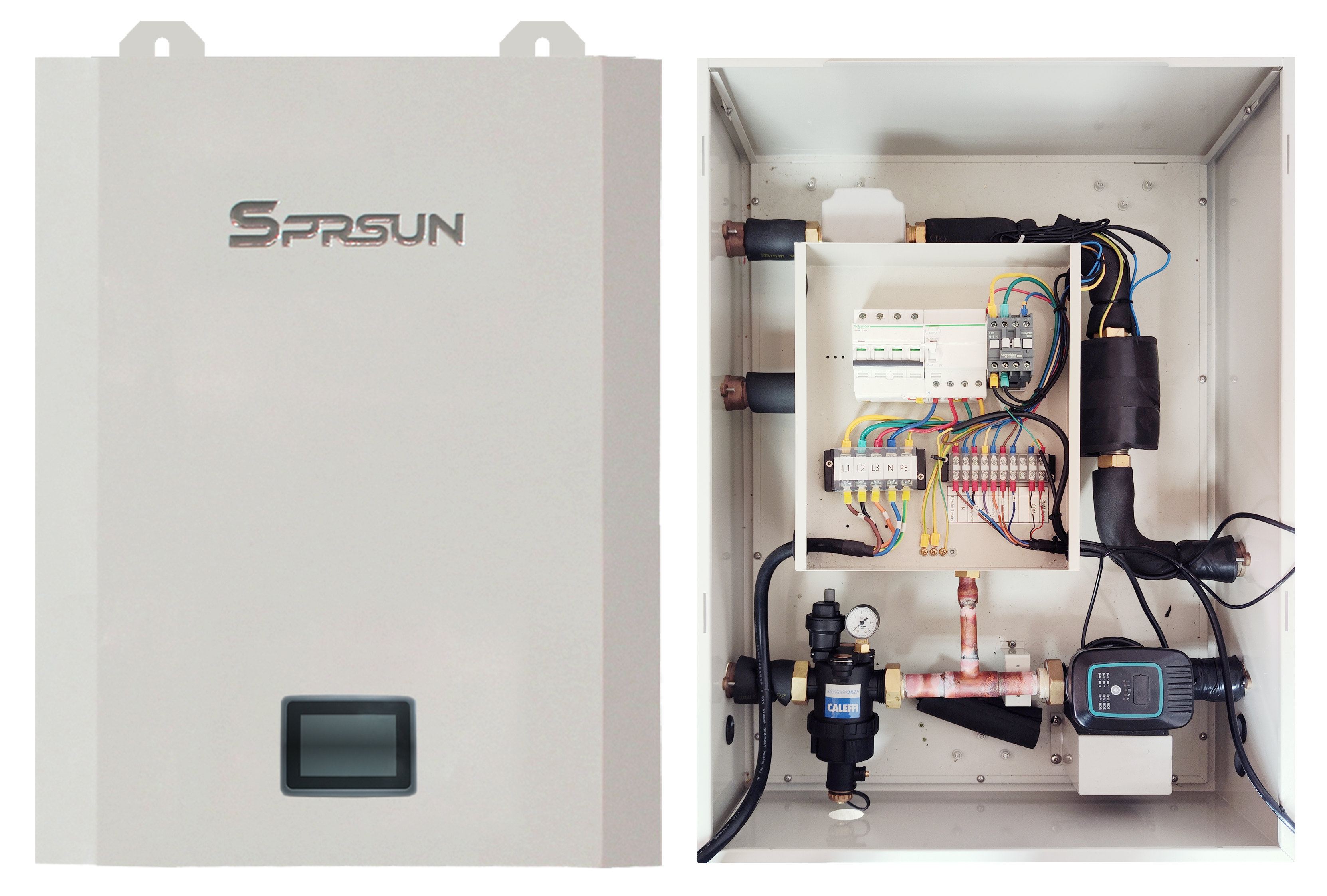
Explore SPRSUN Heat Pump Solutions:
The right hydraulic configuration depends on the specific requirements of each project. By understanding the differences between integrated and external circulation pumps, distributors and installers can better select the appropriate heat pump configuration.
SPRSUN offers monobloc air-to-water heat pumps with different hydraulic configurations, as well as compatible heat pump kits and hydraulic components for selected applications.
With heat pump manufacturing experience dating back to 1999, SPRSUN also provides OEM, ODM, and private-label services to support distributors and heating solution providers.
Looking for a suitable monobloc heat pump for your project? Contact SPRSUN to discuss your technical and customization requirements.
No. Some monobloc heat pumps feature an integrated circulation pump, while others are designed to work with an external pump. The configuration depends on the product design and intended application.
Not necessarily. A built-in circulation pump may be sufficient for the primary heating or cooling circuit, but an additional external pump may still be required for secondary heating circuits, multiple zones, or systems with higher hydraulic resistance. In some applications, it can also help meet the flow and head requirements of the overall hydraulic system. The final configuration should follow the manufacturer's hydraulic design requirements and control recommendations.
The required pump capacity depends on the heat pump's specified water flow rate and the total hydraulic resistance of the system. Installers should check the pump performance curve to ensure sufficient flow at the required head.
Neither option is universally better. External pumps often provide greater flexibility for commercial systems with multiple circuits, buffer tanks, or complex piping layouts. However, an integrated pump can also be suitable when its flow and head specifications meet the project requirements.